How Long Does a Baby Cry During Sleep Training? What to Expect
Sep 01, 2026
Sleep training is one of those parenting decisions that can feel much harder before you actually begin. You've probably read about different methods, heard completely different opinions from other parents, and seen plenty of conflicting advice online.
But there is one question that comes up again and again: "How much is my baby actually going to cry?"

Maybe you're worried that your baby will cry for hours. Maybe you're wondering whether the crying gets worse before it gets better. Or perhaps someone told you that sleep training only takes three nights, and you're wondering whether your baby will simply stop crying after three nights.
The truth is that there isn't one fixed amount of crying that every baby will experience during sleep training. Some babies cry very little, while others protest more intensely at the beginning. Some babies adjust quickly, while others need more time.
Most importantly, the amount of crying doesn't determine whether sleep training is working.
Why Do Babies Cry During Sleep Training?
Crying Is Your Baby's Way of Communicating
When you change the way your baby falls asleep, they may protest. If your baby is used to being fed, rocked, held or patted to sleep, suddenly changing that routine can be confusing.
Your baby isn't necessarily crying because they don't feel loved or because something is wrong. They're communicating that something has changed.
Think about it from your baby's perspective. Until now, perhaps feeding or rocking has always been part of falling asleep. Now you're introducing a different way of settling. Your baby may not understand why the familiar routine has changed.
Crying can therefore be part of the adjustment process. That doesn't mean you have to ignore your baby or choose an approach that makes you uncomfortable. It simply means that some level of protest can happen when sleep habits change.
So, How Long Does a Baby Cry During Sleep Training?
There Is No Universal Number
This is probably the answer parents don't want to hear, but it's the most honest one.
There is no guaranteed number of minutes or nights that your baby will cry during sleep training.
One baby may cry for 10 minutes on the first night and settle. Another may protest for 30 minutes. Another may have several periods of crying throughout the night.
The duration can also change from one night to another. A baby might cry more on night one, less on night two, and then suddenly have a much easier third night. Or progress may happen more gradually.
This is why I don't recommend comparing your baby's sleep training journey with someone else's. Your friend's baby is not your baby.
Their age, temperament, sleep associations, schedule, environment and previous sleep experiences can all be different.
Does Crying Usually Get Better Each Night?
Progress Is Often Uneven
Many parents expect sleep training to look like a straight line: night one means lots of crying, night two means less crying, and night three means no crying.
Sometimes it does happen that way.
But real life isn't always so neat.
Your baby may have a good night followed by a difficult one. They may settle quickly at bedtime but protest more during a night waking. They may improve for several nights and then struggle again when they're learning a new developmental skill or their routine changes.
The important thing is to look at the overall trend, rather than judging the process based on one difficult night.
If your baby's crying is gradually decreasing and they're becoming more comfortable falling asleep independently, that's meaningful progress.
What Happens During the First Night of Sleep Training?
The First Night Can Be the Hardest
For many families, the first night is emotionally challenging.
Your baby is experiencing a change in their normal sleep routine, and you are experiencing a change too. You may find yourself questioning everything.
"Should I go in?"
"Should I pick them up?"
"Is this too much?"
"Maybe they're not ready."
Having a clear plan before you begin can make a huge difference.
You need to know what method you're using, when you will respond, what your baby's bedtime routine will look like and how you will handle night wakings.
The more consistent you can be, the easier it becomes for your baby to understand what is happening.

What About the Second and Third Nights?
Don't Expect Every Night to Look the Same
Some babies show significant improvement after the first night. Others need several nights before they understand the new routine.
You may also notice that the type of crying changes.
At first, your baby may cry intensely because the entire routine feels unfamiliar. Later, they may protest briefly before settling.
Again, there is no magic deadline.
The goal isn't to get your baby to stop crying as quickly as possible at any cost. The goal is to help your baby learn a new sleep skill while providing the level of support that fits your chosen approach.
Does More Crying Mean the Sleep Training Method Isn't Working?
Not Necessarily
A common mistake is assuming that crying means you've chosen the wrong method.
But crying is not a measurement of success or failure.
Your baby can cry and still be learning. Your baby can also cry very little and still need time to develop consistent sleep skills.
What you want to observe is what happens after the crying.
Does your baby eventually settle? Are they becoming more comfortable with the new routine? Are bedtime struggles gradually decreasing? Are night wakings becoming easier to manage?
Those changes tell you much more than the number of minutes your baby cried on one particular night.
Does Sleep Training Have to Mean Leaving Your Baby to Cry Alone?
There Are Different Ways to Approach Sleep Training
Sleep training isn't one single method.
Some approaches involve giving your baby more space to practise falling asleep independently. Other approaches involve more frequent parental reassurance and gradual changes.
The right approach depends on your baby's age, temperament, current sleep habits and your family's comfort level.
This is why I don't believe parents need to choose between "do nothing" and "leave my baby to cry."
There are different ways to work toward independent sleep.
The important thing is choosing an approach intentionally rather than following a random method you found online.
What Can Make a Baby Cry More During Sleep Training?
Your Baby's Sleep Schedule Matters
Sleep training isn't just about what you do at bedtime.
Your baby's daytime schedule can have a significant impact on how easily they settle. If your baby is going to bed overtired, they may have a much harder time settling.
If they're undertired, they may not have enough sleep pressure to fall asleep easily.
This is why I always recommend looking at the bigger picture before beginning sleep training.
Make sure the timing is appropriate, naps are reasonably balanced and your baby is going into bedtime with the right amount of sleep pressure.
Sleep Associations Can Also Affect the Adjustment
If your baby has always fallen asleep through feeding, rocking or being held, changing that association can take some adjustment.
The stronger the association, the more likely your baby may protest when you change it.
This doesn't mean you shouldn't make the change. It simply means you should have realistic expectations about the transition.
What If My Baby Cries for a Very Long Time?
Know When to Reassess
If your baby is consistently crying for prolonged periods without making any progress, don't simply assume you need to "push through."
Take a step back and look at the situation.
Is your baby's schedule appropriate? Are they genuinely ready for the approach you're using? Is there an underlying reason they're struggling? Are you being consistent with your response?
Could illness, hunger or another temporary issue be affecting sleep?
If you're unsure, getting professional guidance can help you understand what is actually happening rather than continuing to guess.
Should You Stop Sleep Training If Your Baby Cries?
Don't Make the Decision Based on One Difficult Night
It is completely normal to feel emotional when your baby cries.
You can know intellectually that crying may be part of the process and still find it difficult to hear. That doesn't make you inconsistent. It makes you a parent.
Before starting, decide what you're comfortable with and choose an approach that aligns with your parenting values.
You don't need to prove anything to other parents. You don't need to use the fastest method. And you don't need to continue with an approach that doesn't feel appropriate for your family.
Sleep training should be a considered decision, not a competition.
How Long Does Sleep Training Usually Take?
Think in Terms of Progress, Not a Deadline
Parents often ask, "How many nights will it take?"
Again, there isn't one answer.
Some babies make noticeable progress within a few nights. Others take longer.
What affects the timeline is not simply the method you choose. Your baby's age, temperament, sleep history, schedule, sleep associations and your consistency can all influence the process.
Rather than setting a rigid deadline, look for signs that your baby is moving in the right direction.
They may settle more quickly. They may need less assistance. They may begin connecting sleep periods more consistently. They may become more comfortable with the bedtime routine.
These are all signs that the new skill is developing.
What Should Parents Expect Emotionally?
Sleep Training Can Be Hard on Parents Too
We often talk about what the baby experiences during sleep training. But we don't talk enough about the parents.
Listening to your baby cry can bring up guilt, anxiety and doubt. You may wonder whether you're doing the right thing. You may compare yourself with another parent whose baby seemed to sleep easily.
You may even feel guilty for wanting more sleep.
But wanting your family to be rested doesn't make you a bad parent.
Sleep deprivation can affect your mood, patience, relationships and ability to function during the day. It is okay to acknowledge that sleep matters for the whole family.
The goal isn't to create a perfect sleeper.
The goal is to find a sustainable sleep situation that works for your baby and your family.
The Bottom Line
There Is No "Normal" Amount of Crying
So, how long does a baby cry during sleep training?
There isn't one number I can give you.
Some babies cry for a few minutes. Some protest for longer. Some improve quickly. Others need more time.
What matters is that you understand your baby's needs, choose an age-appropriate approach, make sure the sleep foundations are in place and remain consistent with the plan you choose.
And remember: crying during sleep training doesn't automatically mean something is wrong.
But you also don't have to navigate it blindly.
If you're considering sleep training and want to understand which approach would suit your baby's age, temperament, sleep habits and your family's needs, my Personalized Baby Sleep Training Program provides one-on-one support to help you create a practical sleep plan and guide you through the process.
You don't need to follow a one-size-fits-all method.
You need a sleep approach that makes sense for your baby and your family.
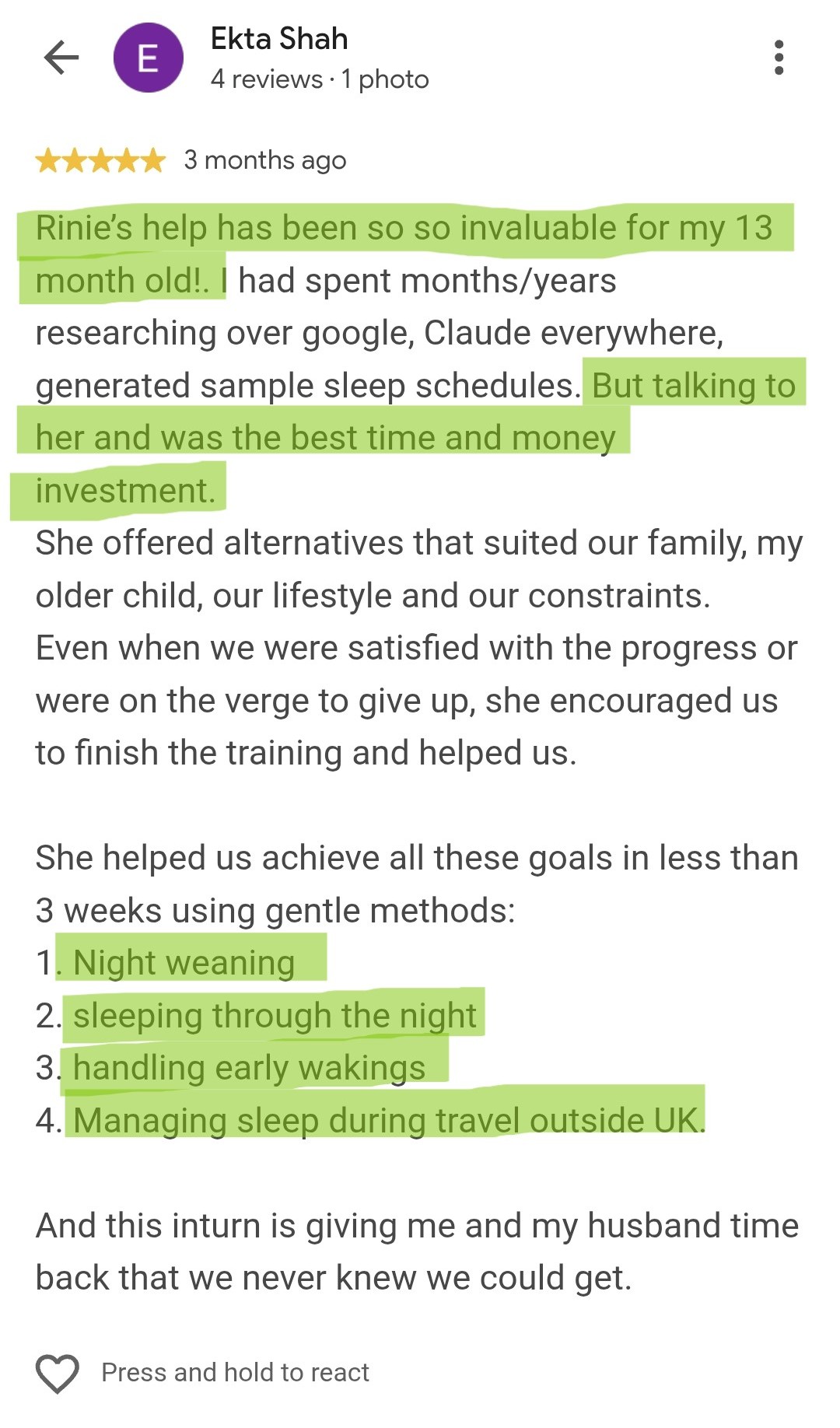
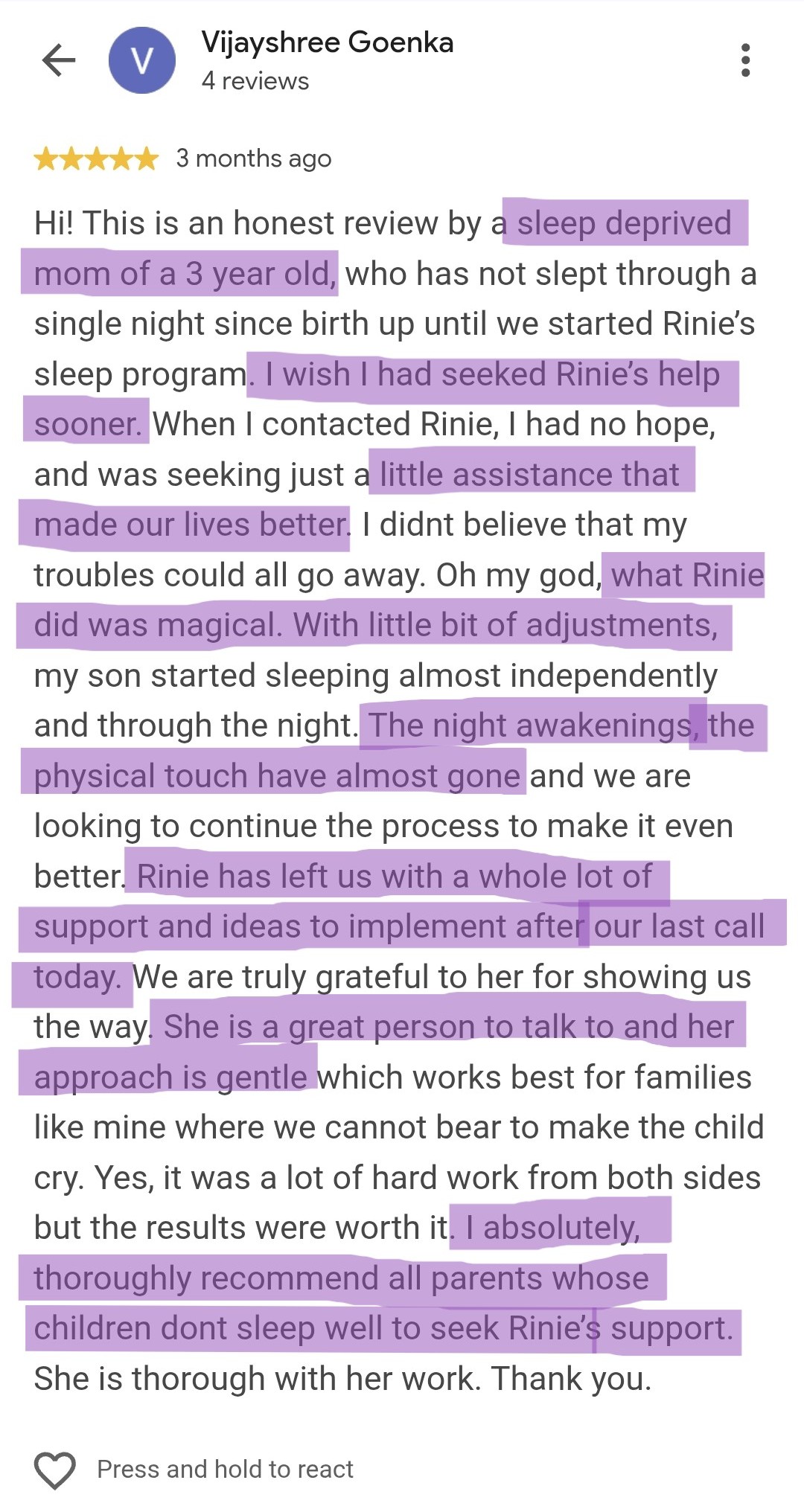
Look at our Reviews
Written By:


