Is Sleep Training Bad for Babies? What the Research Really Says
Sep 10, 2026
If you've ever searched for information about sleep training, you've probably come across some very strong opinions.
One person says sleep training is essential for getting your baby to sleep independently.
Another says it will damage your baby's attachment.
Someone else says that letting your baby cry during sleep training causes emotional harm.
And then there are parents who say sleep training completely changed their family's life.
So what are you actually supposed to believe?
Is sleep training bad for babies?
The short answer is: sleep training is not inherently bad for babies. Research on commonly studied behavioral sleep interventions has not found evidence of long-term harm to attachment, emotional development, or the parent-child relationship. However, sleep training isn't one single method, and it should be approached in an age-appropriate, responsive and individualized way.
The problem is that social media often turns a nuanced topic into a simple "sleep training is good" versus "sleep training is bad" debate.
Real life is much more complicated.
Why Do People Think Sleep Training Is Harmful?
Much of the Fear Comes From Misunderstanding What Sleep Training Means
Sleep training is often described as simply leaving a baby alone to cry.
But that's not what sleep training means.
Sleep training is a broad term used for approaches that help babies develop the ability to fall asleep and return to sleep with less parental assistance.
There are different methods, and they vary in how much parental involvement they include.
Some approaches involve gradual changes and frequent reassurance. Others are more structured and involve giving the baby more opportunities to practise settling independently.
So when someone says "sleep training is harmful," the first question should be:
Which method are we talking about?
Without knowing the specific approach, the baby's age, the family's circumstances and how the intervention is being implemented, it's difficult to make a blanket statement about sleep training.
Does Sleep Training Damage Attachment?
What Does the Research Actually Show?
This is probably the biggest fear parents have.
Many parents worry that if they don't immediately respond to every cry during sleep training, their baby will stop trusting them or become less securely attached.
But research doesn't support that conclusion.
A randomized controlled trial involving infants aged 6 to 16 months compared behavioral sleep interventions, including graduated extinction and bedtime fading, with a control group. The researchers found improvements in sleep and did not find adverse effects on infant stress responses or parent-child attachment at the 12-month follow-up.
A separate randomized trial followed children for five years after a behavioral sleep intervention. Researchers found no evidence of differences between the intervention and control groups in children's emotional or conduct behavior, parent-child closeness, conflict, attachment, psychosocial functioning or parental mental health.
That doesn't mean that every sleep training method has been studied equally or that research can answer every possible question about every family.
But it does mean that the claim "sleep training causes attachment problems" is not supported by these randomized trials.
Does Crying During Sleep Training Harm a Baby?
Crying Doesn't Automatically Mean Harm
This is another area where parents can feel incredibly guilty.
Hearing your baby cry is hard.
That's especially true when you're intentionally changing something about their sleep routine and you know they're protesting the change.
But crying is a form of communication.
A baby may cry because they're frustrated, tired, confused by a change in routine or unhappy about being asked to do something differently.
That doesn't automatically mean they're experiencing psychological harm.
In the 2016 randomized trial, researchers specifically measured infant stress responses and found no adverse stress response associated with the behavioral interventions studied.
At the same time, this doesn't mean parents should ignore what their baby is communicating.
Sleep training should never mean ignoring hunger, illness, pain or a genuine safety concern.
The goal is to understand why your baby is crying and respond according to the approach you've chosen and your baby's individual needs.
Does Sleep Training Mean Leaving Your Baby to Cry?
There Isn't Just One Sleep Training Method
One of the biggest misconceptions about sleep training is that it always means leaving your baby alone until they fall asleep.
It doesn't.
There are gradual approaches where parents slowly reduce the amount of help they provide.
There are approaches involving regular check-ins and reassurance.
There are also more structured behavioral approaches.
The right choice depends on your baby's age, temperament, current sleep associations, your family's circumstances and what you are comfortable implementing consistently.
You don't have to choose an approach simply because someone online says it's the fastest.
And you don't have to reject sleep training altogether because you don't feel comfortable with one particular method.
Can Sleep Training Make Babies Less Attached to Their Parents?
Attachment Is Built Throughout the Day, Not Just at Bedtime
Your relationship with your baby is built through thousands of interactions.
Feeding them.
Comforting them.
Playing with them.
Responding to their needs.
Holding them.
Talking to them.
Being emotionally available.
A bedtime routine is only one small part of that relationship.
The available long-term research on behavioral infant sleep interventions has not found evidence that these interventions create lasting differences in attachment or parent-child relationships. In the five-year follow-up study, researchers found no significant differences in parent-child closeness, conflict, global relationship or disinhibited attachment between intervention and control groups.
This is important because parents sometimes believe that helping a baby learn to sleep independently means they are teaching the baby that their parents won't come when needed.
The research doesn't support that assumption.
What About the Stress Hormone Cortisol?
This Is Often Taken Out of Context
You may have seen claims online that sleep training causes babies' cortisol levels to rise and therefore causes harmful stress.
The question is more complicated than that.
In the randomized trial of behavioral sleep interventions, researchers measured infant salivary cortisol and found small-to-moderate declines in the intervention groups compared with controls. They also found no adverse effects on attachment or later emotional and behavioral outcomes.
This is a good example of why it's important to look at the actual study rather than a single sentence taken from a social media post.
Research should be interpreted in context.
Is Sleep Training Necessary for Every Baby?
Absolutely Not
This is just as important as saying that sleep training isn't inherently harmful.
Not every family needs sleep training.
If your baby is sleeping in a way that works for your family, there may be no reason to change it.
If you're comfortable feeding your baby to sleep, rocking them, responding to night wakings or staying beside them while they fall asleep, you don't have to sleep train simply because someone else is doing it.
Sleep training is an option, not a parenting requirement.
The reason many families choose it is because their current sleep situation is no longer sustainable.
Perhaps the baby is waking every hour.
Perhaps they need extensive assistance to fall asleep every time.
Perhaps the parents are severely sleep deprived.
Perhaps bedtime takes hours every night.
In those situations, improving sleep can make a meaningful difference to the entire family.
Can Sleep Training Benefit Parents Too?
Parents' Sleep Matters
We often focus entirely on the baby when discussing sleep.
But parents need sleep too.
Sleep deprivation can affect your mood, patience, relationships and ability to function during the day.
Research has also looked at the impact of infant sleep interventions on maternal mental health. One randomized trial found that mothers in the intervention group were less likely to report depressive symptoms at two years, with no evidence of longer-term adverse effects on children's mental health or parenting practices.
This doesn't mean that every parent needs to sleep train.
It simply reminds us that the parent's well-being is part of the family's well-being too.
When Can Sleep Training Be the Wrong Approach?
Timing and Individual Circumstances Matter
Even though sleep training isn't inherently harmful, that doesn't mean you should start it at any time or under any circumstances.
If your baby is unwell, experiencing significant feeding difficulties or going through another major issue affecting their sleep, it's worth addressing those concerns first.
Newborns are also different from older infants. Their sleep is biologically immature, and frequent feeding and waking are normal parts of early development.
Before starting any sleep intervention, consider your baby's age, development, feeding, health and current sleep needs.
And if you're unsure whether your baby is ready, speak with your pediatrician or a qualified sleep professional.
What Should You Look for in a Sleep Training Approach?
It Should Be Safe and Age-Appropriate
A sleep plan should never compromise safe sleep.
Your baby should continue to sleep in a safe environment, and sleep training should not involve unsafe practices simply to make the baby sleep longer.
It Should Be Realistic for Your Family
A sleep method might work beautifully for one family and be completely impractical for another.
Consider your work schedules, other children, living arrangements, support system and your own comfort level.
The "best" method isn't necessarily the one that produces the fastest results.
It's the one that you can implement consistently while still feeling comfortable with how you are responding to your baby.
It Should Consider the Whole Sleep Picture
Sleep training isn't simply about what happens when you put your baby in the crib.
Wake windows, naps, bedtime timing, sleep environment, feeding and sleep associations can all influence how easily your baby settles.
If those foundations aren't right, you may end up blaming the sleep training method for a problem that actually comes from an unsuitable schedule.
So, Is Sleep Training Bad for Babies?
The Answer Isn't as Simple as Social Media Makes It Sound
Based on the randomized studies available, commonly studied behavioral sleep interventions have not been shown to cause long-term harm to attachment, emotional development or the parent-child relationship. Studies have also found improvements in infant sleep and, in some research, improvements in maternal mental health.
But that doesn't mean every family needs sleep training.
And it doesn't mean that every method is appropriate for every baby.
Instead of asking, "Is sleep training bad?", a better question is:
"Is my baby ready, and is this particular approach appropriate for my baby and my family?"
That's where individualized guidance becomes important.
The Bottom Line
You Don't Have to Choose Between Sleep and Connection
Sleep training doesn't mean you're choosing sleep over your baby.
It doesn't mean you're becoming less responsive.
And it doesn't mean you're damaging your relationship.
For some families, sleep training can be a useful tool for helping a baby develop more independent sleep skills while also giving exhausted parents the opportunity to get more rest.
For other families, it may not be necessary or may not feel like the right choice.
There is no single right answer for every family.
What matters is making an informed decision based on your baby's developmental needs, your family's circumstances and what you feel comfortable with.
If you're considering sleep training but feel overwhelmed by the different methods and conflicting advice online, my Personalized Baby Sleep Training Program provides one-on-one support to help you understand your baby's sleep, identify what's actually causing the sleep challenges and create a plan that is tailored to your family.
You don't need to follow a method just because someone on the internet says it's the "right" one.
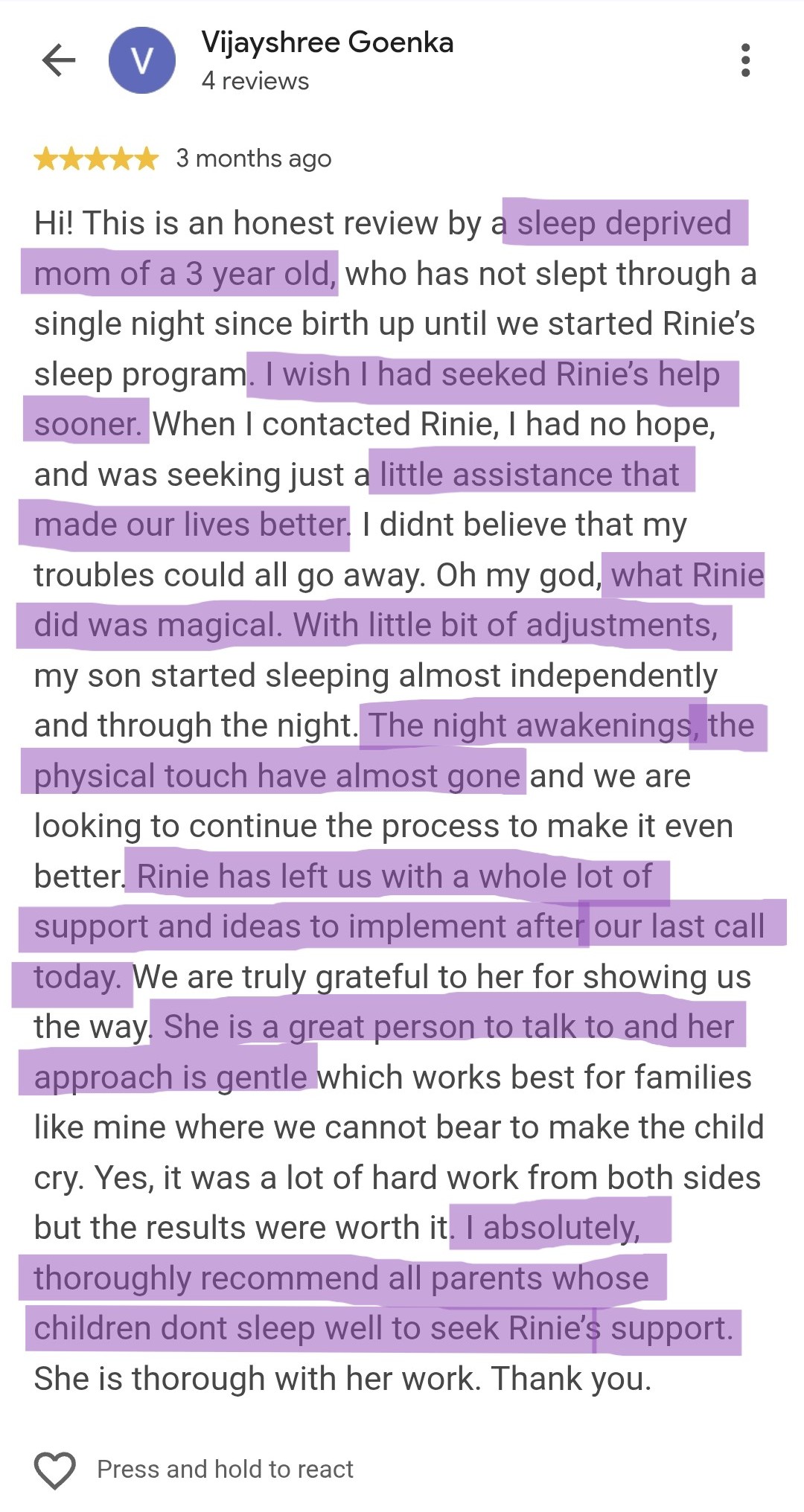
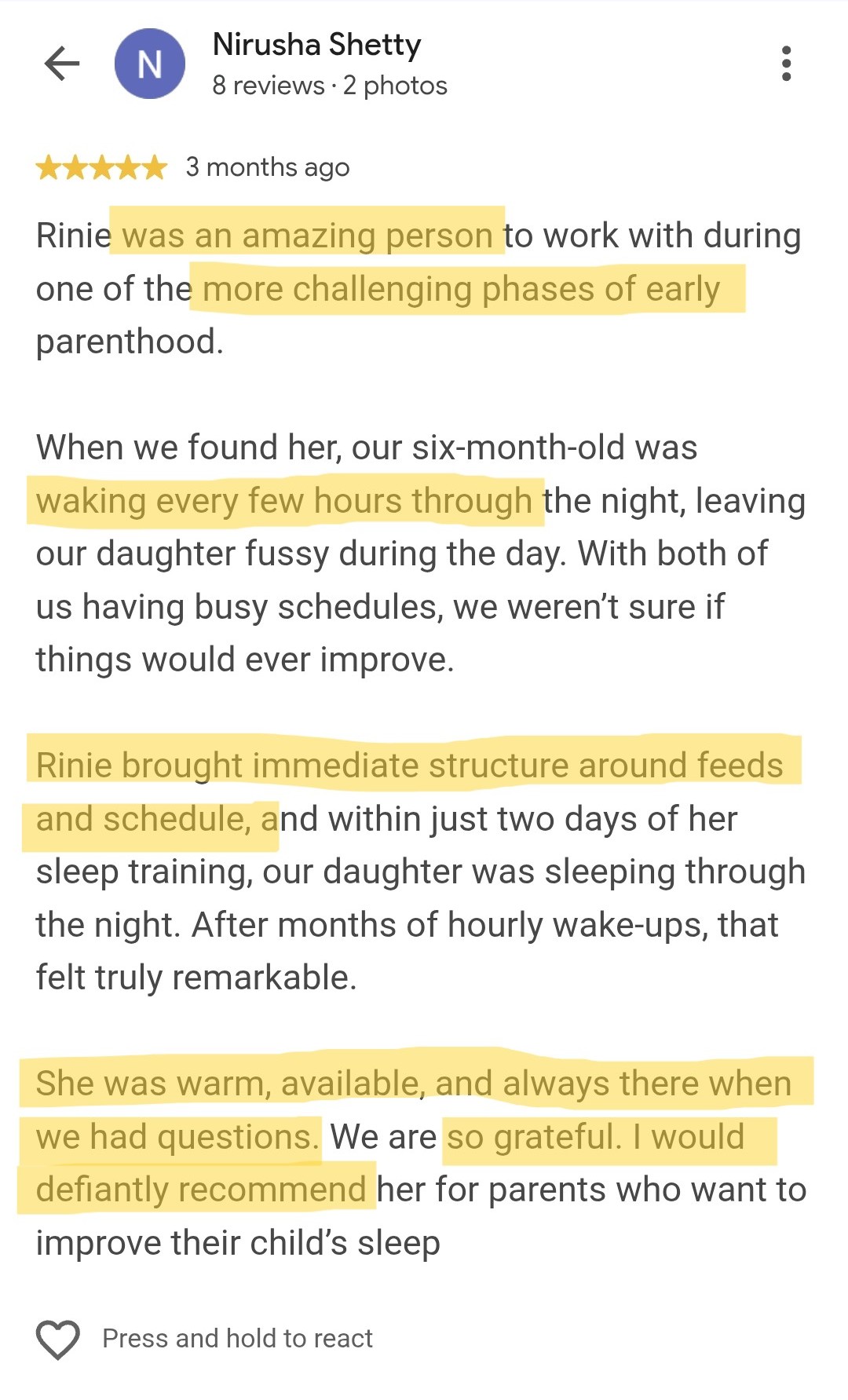
Look at our Reviews
Written By:


