How to Fix Your Baby’s Late Bedtime: 3 Changes That Can Help
Oct 20, 2026
Why Is Your Baby Going to Bed So Late?
Does bedtime keep getting pushed later, even when you start your routine early? Or does your baby seem wide awake just when you’re ready to call it a night?
A late bedtime can happen for several reasons. Your baby’s body clock may be running later than you’d like, daytime naps may be affecting their sleep pressure, or their morning wake-up time may vary from day to day.
The good news? You don’t necessarily need a completely new bedtime routine. A few small, consistent changes can help your baby gradually settle into an earlier schedule.
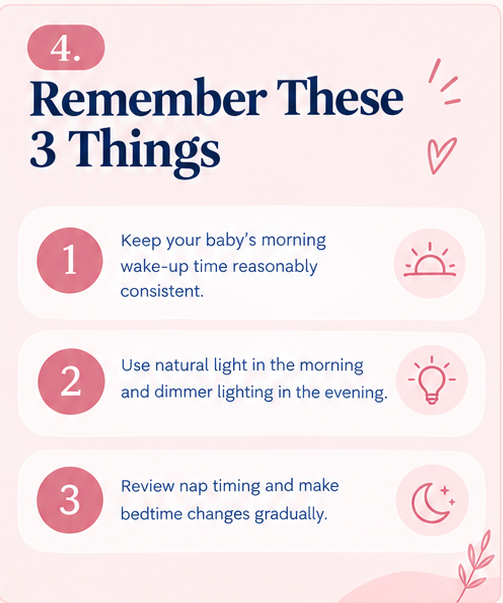
1. Start With a Consistent Morning Wake-Up Time
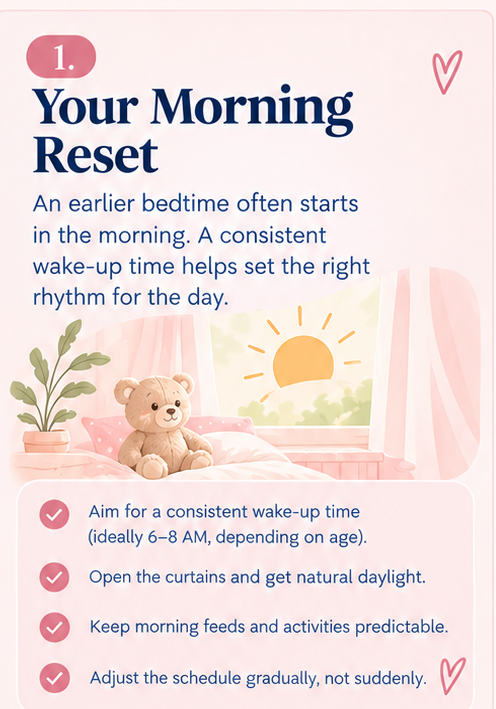
An earlier bedtime often starts in the morning.
Your baby’s internal body clock responds to daily cues, including when they wake up, when they eat, and when they experience daylight. If your baby wakes up at very different times each morning, their sleep schedule may become harder to predict.
Try to keep your baby’s morning wake-up time reasonably consistent, including after a difficult night. For many families, a wake-up time between 6 and 8 AM can be a useful starting point, depending on the baby’s age and total sleep needs.
Avoid suddenly waking your baby much earlier just to force an earlier bedtime. Make changes gradually and consider their individual sleep needs.
2. Use Light to Support Your Baby’s Body Clock
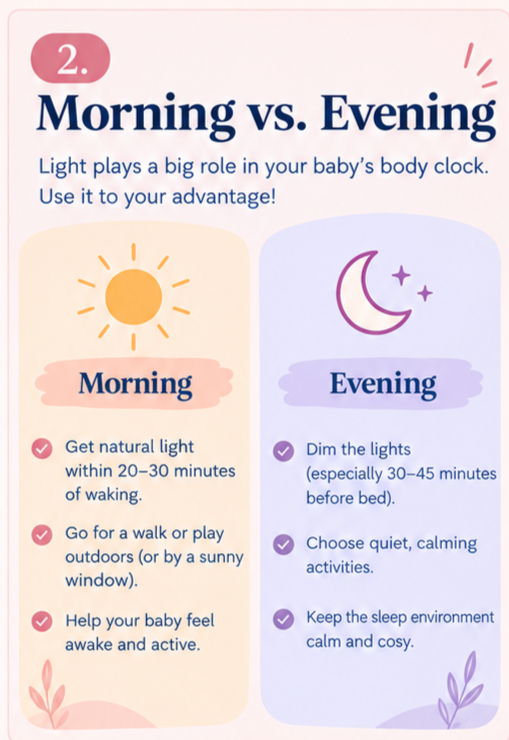
Light is one of the strongest environmental cues that helps regulate the body’s circadian rhythm, or internal 24-hour clock.
Bright natural light in the morning helps signal that the day has begun. In contrast, bright lights and stimulating activities close to bedtime can make it harder for some babies to wind down.
Try spending around 20–30 minutes in natural daylight in the morning when practical. In the evening, dim the lights and reduce stimulation during the final 30–45 minutes before bed.
You don’t need to keep your home completely dark. The goal is to create a clear difference between daytime and nighttime.
3. Check Whether Daytime Naps Are Affecting Bedtime
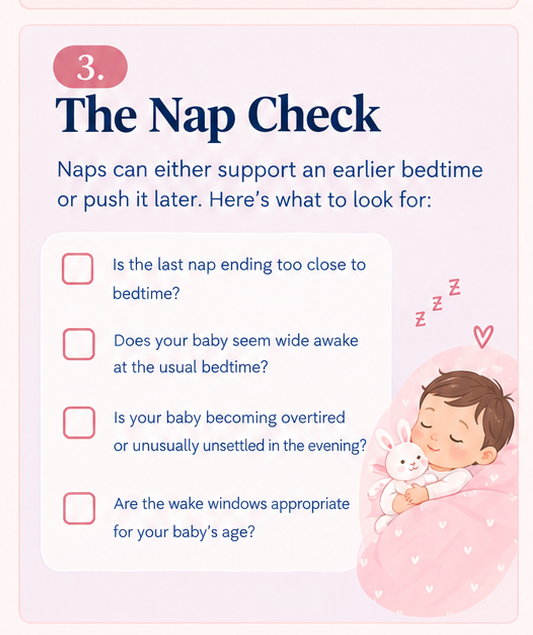
Naps play an important role in your baby’s sleep, but their timing and duration can influence how ready your baby is for bed.
A late-afternoon nap that ends close to bedtime may leave your baby with too little time awake to build enough sleep pressure. On the other hand, keeping a tired baby awake for too long can lead to overtiredness, making it harder for them to settle.
The right approach depends on your baby’s age, nap pattern, and individual sleep needs. Instead of cutting naps suddenly, look at when they happen, how long they last, and how your baby behaves at bedtime.
How Quickly Can You Move Bedtime Earlier?
If your baby is used to falling asleep late, moving bedtime forward by several hours in one night may not work well.
Instead, try shifting bedtime earlier in small increments, such as 10–15 minutes at a time, while keeping the morning wake-up time and evening routine reasonably consistent. Watch how your baby responds and adjust as needed.
A bedtime between 7 and 9 PM works for many babies, but the ideal time depends on age, naps, and total sleep needs. The aim is not to force a particular clock time; it’s to find a schedule that allows your baby to get enough sleep and settle comfortably.
A More Manageable Bedtime Starts With Small Changes
Fixing a late bedtime doesn’t have to mean changing everything at once. Start with a consistent morning, pay attention to light exposure, and review how daytime naps affect your baby’s evenings.
Give each change time to work, and remember that sleep needs vary with age and development. If bedtime continues to feel like a struggle, a more personalised approach may help you understand what’s affecting your baby’s sleep.
Need a More Personalised Approach to Your Baby’s Sleep?
Every baby has different sleep needs, and what works for one family may not work for another. If you’re struggling with a late bedtime or finding it difficult to establish a consistent sleep routine, personalised guidance can help you understand your baby’s sleep patterns and create a plan that works for your family.
Explore our Personalized Baby Sleep Training Program to get support tailored to your baby’s needs and work towards more manageable bedtimes.
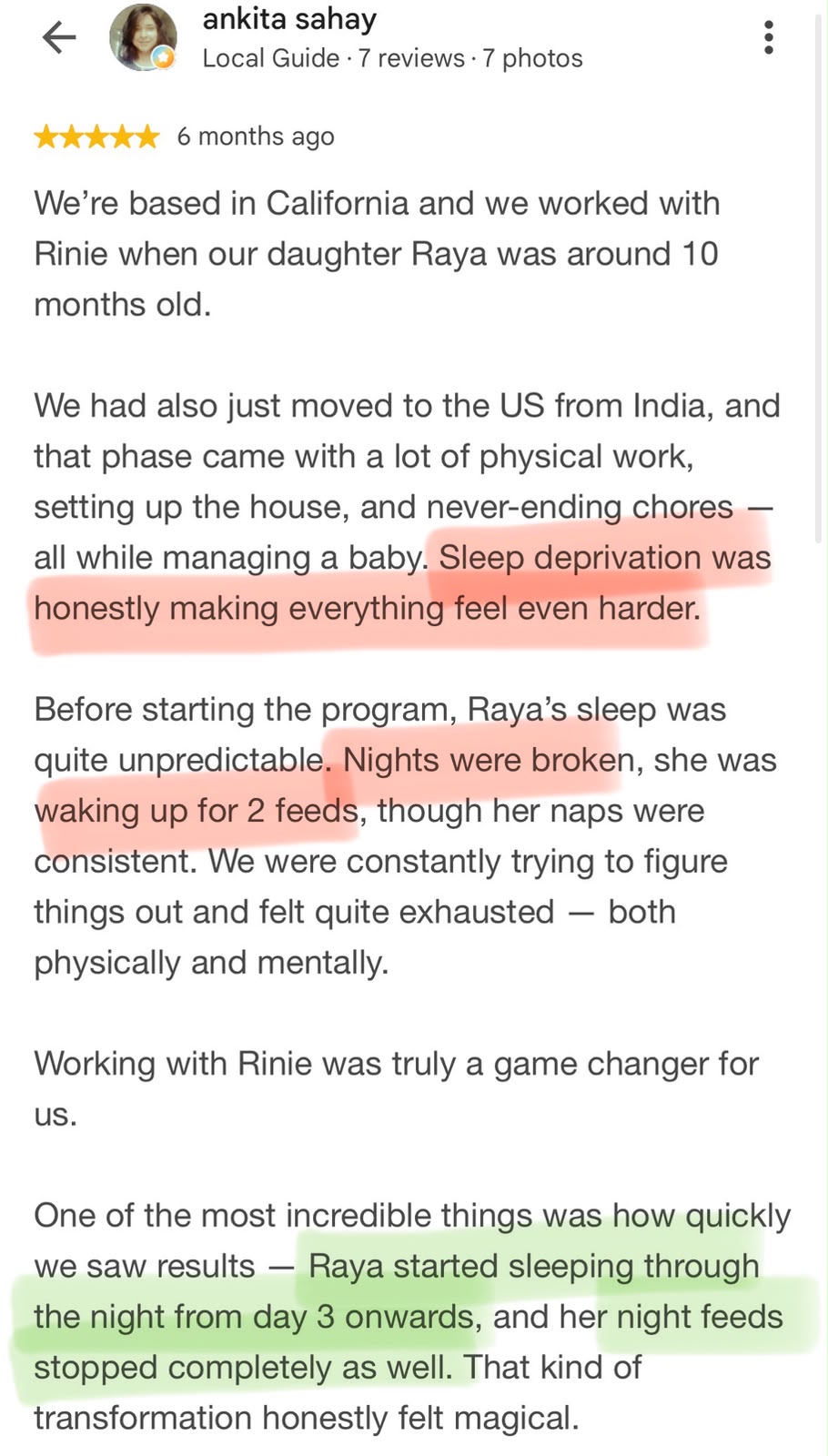
Look at our reviews

Written By:


