My Baby Wakes Happy After a 30-Minute Nap: Should I Try to Resettle?
Aug 27, 2026
A baby finally falls asleep for their nap, and you think you finally have a little time to yourself. Maybe you make a cup of tea, answer a few messages, or simply sit down. Then, 30 minutes later, you hear your baby awake.
You walk into the room expecting a tired, crying baby.
Instead, they're smiling.
They're babbling.
They're completely ready to start their day.
And now you're wondering, "Was that nap really enough?"
Many parents assume that a 30-minute nap automatically means their baby hasn't slept enough. But that's not necessarily true.
A short nap can sometimes be completely normal, especially if your baby wakes happy and manages the rest of their wake time comfortably.
The important question isn't simply how long did my baby sleep?
It's how does my baby behave after that sleep?
Why Does My Baby Wake After 30 Minutes?
A 30-minute nap can often happen because your baby has completed one sleep cycle. Babies move through shorter sleep cycles than adults, and they may naturally become more alert when one cycle ends.
Some babies are able to move smoothly into another sleep cycle and continue sleeping. Others wake fully.
This doesn't automatically mean there is a problem with your baby's sleep.
If your baby wakes after 30 or 40 minutes and is happy, alert and ready to interact, that nap may have been enough for them at that particular time.
Your Baby May Simply Be Ready to Wake
Babies don't all have identical sleep needs.
One baby may need a long afternoon nap, while another may naturally take a shorter nap and still be completely well-rested.
This is why I don't want parents to become too focused on making every nap reach a particular number of minutes.
A nap isn't successful simply because it lasted an hour.
What matters is whether your baby is getting enough sleep overall and whether they are coping well when they're awake.
Should You Resettle a Baby Who Wakes After 30 Minutes?
If your baby wakes after 30 minutes, you don't necessarily need to rush in and immediately try to get them back to sleep.
Instead, take a moment to observe them.
If they're quietly moving around, babbling or looking around, they may still be tired enough to fall back asleep.
Give them a little opportunity to settle if they are comfortable.
On the other hand, if your baby is clearly awake, happy and ready to get up, repeatedly trying to force another sleep cycle may simply create frustration for both of you.
Look at Your Baby's Mood After the Nap
Your baby's behaviour can give you useful information.
If they wake happy, feed well, play comfortably and make it through their next wake window without becoming extremely tired, there may be nothing that needs fixing.
But if your baby wakes after 30 minutes crying, rubbing their eyes, becoming increasingly fussy or struggling to stay awake until the next nap, the short nap may not have been restorative enough.
This distinction is much more useful than simply looking at the clock.
When Is a 30-Minute Nap Completely Fine?
A 30-minute nap can be completely normal when your baby is otherwise sleeping well across the 24-hour period.
Some babies naturally take shorter naps during certain parts of the day. Their sleep patterns can also change as they grow and their sleep needs evolve.
Instead of judging one nap on its own, look at the bigger picture.
Look at Your Baby's Total Sleep
Ask yourself whether your baby is getting enough sleep across the entire day and night.
Are they generally happy when awake?
Are they feeding well?
Are they able to stay comfortably awake until their next sleep opportunity?
Is bedtime reasonably smooth?
If the answer to these questions is yes, a short nap may simply be your baby's normal sleep pattern.
You don't need to turn every 30-minute nap into a sleep project.
When Should You Try to Extend the Nap?
There are situations where short naps are worth investigating.
If your baby consistently wakes after one sleep cycle but still appears exhausted, the short naps may be contributing to overtiredness throughout the day.
Look for Signs That Your Baby Still Needs More Sleep
For example, your baby may sleep for 30 minutes, wake up briefly, and then become extremely fussy shortly afterwards.
They may struggle through the next wake window, become difficult to settle for the following nap and eventually reach bedtime already overtired.
In this situation, I would look more closely at why the nap is ending so quickly.
The timing of the nap, your baby's sleep environment and how they fall asleep can all play a role.
This is also where understanding wake windows becomes useful. A wake window that is too short or too long can affect the amount and quality of sleep your baby gets.
Could Your Baby Be Undertired?
Sometimes parents assume that a short nap means their baby is overtired.
But that isn't always the case.
Your baby could also be undertired.
If your baby hasn't built enough sleep pressure before the nap, they may fall asleep because they're somewhat tired, complete one sleep cycle and then wake feeling refreshed.
A Happy Baby Can Give You an Important Clue
Imagine your baby sleeps for 35 minutes.
You walk into the room expecting them to be exhausted.
Instead, they're smiling, playing and completely content.
They continue happily through their next wake period.
That can be a sign that the nap was sufficient for them at that point in the day.
Rather than immediately trying to make the nap longer, look at what your baby is telling you.
Sometimes the answer isn't "How do I extend this nap?"
It's "Does my baby actually need a longer nap?"

Why Does My Baby Sometimes Take Long Naps and Sometimes Short Naps?
Baby sleep isn't perfectly predictable.
A baby who takes a two-hour nap one day may take a 35-minute nap the next day.
Developmental changes, sleep pressure, activity levels and changes in your baby's schedule can all influence how long they sleep.
Don't Expect Every Nap to Look the Same
It is completely normal for different naps in the same day to have different lengths.
You may find that your baby's first nap is longer while their later nap is shorter.
Or you may notice that naps change again as your baby grows.
The goal isn't to make every nap identical.
The goal is to make sure the overall sleep pattern is working for your baby.
How Can You Help Your Baby Connect Sleep Cycles?
If your baby consistently wakes after one sleep cycle and appears tired, you can look at the basics before trying complicated nap-extending techniques.
Make sure your baby's sleep environment is appropriate for daytime sleep. A dark room, comfortable temperature and consistent background noise can help reduce unnecessary disruptions.
Get the Timing Right
The timing of the nap matters too.
If your baby is put down too early, they may not have enough sleep pressure to stay asleep for another cycle.
If they're put down too late, they may become overtired and have difficulty connecting sleep cycles.
This is why there isn't one universal wake window that works perfectly for every baby.
Your baby's age gives you a starting point, but their individual behaviour matters too.
Should You Always Try to Rescue a Short Nap?
No.
This is one of the biggest things I want parents to remember.
Not Every Short Nap Needs Fixing
If your baby wakes after 30 minutes and is happy, alert and coping well with their day, you don't necessarily need to spend another 45 minutes trying to get them back to sleep.
Sometimes your baby simply had a short nap.
And that's okay.
But if short naps are happening consistently and they're affecting your baby's mood, bedtime, nighttime sleep or total daytime sleep, then it's worth looking more closely at what's happening.
The answer could be timing.
It could be sleep pressure.
It could be the sleep environment.
It could be your baby's sleep associations.
Or it could simply be that your baby's sleep needs have changed.
The Bottom Line
A 30-minute nap isn't automatically a bad nap.
If your baby wakes happy and remains well-rested throughout the day, there may be nothing you need to fix.
But if your baby wakes tired and the short naps are creating a cycle of overtiredness, then it's worth looking at their schedule, sleep environment and sleep habits more closely.
Don't judge your baby's sleep by the clock alone.
Your baby's behaviour can tell you much more.
If you're constantly wondering whether your baby's naps are too short, whether their wake windows are right or why their sleep keeps changing, my Personalized Baby Sleep Training Program provides one-on-one support to help you understand your baby's individual sleep needs and create a sleep plan that works for your family.
Sometimes the answer isn't a longer nap. It's understanding why the nap ended in the first place.
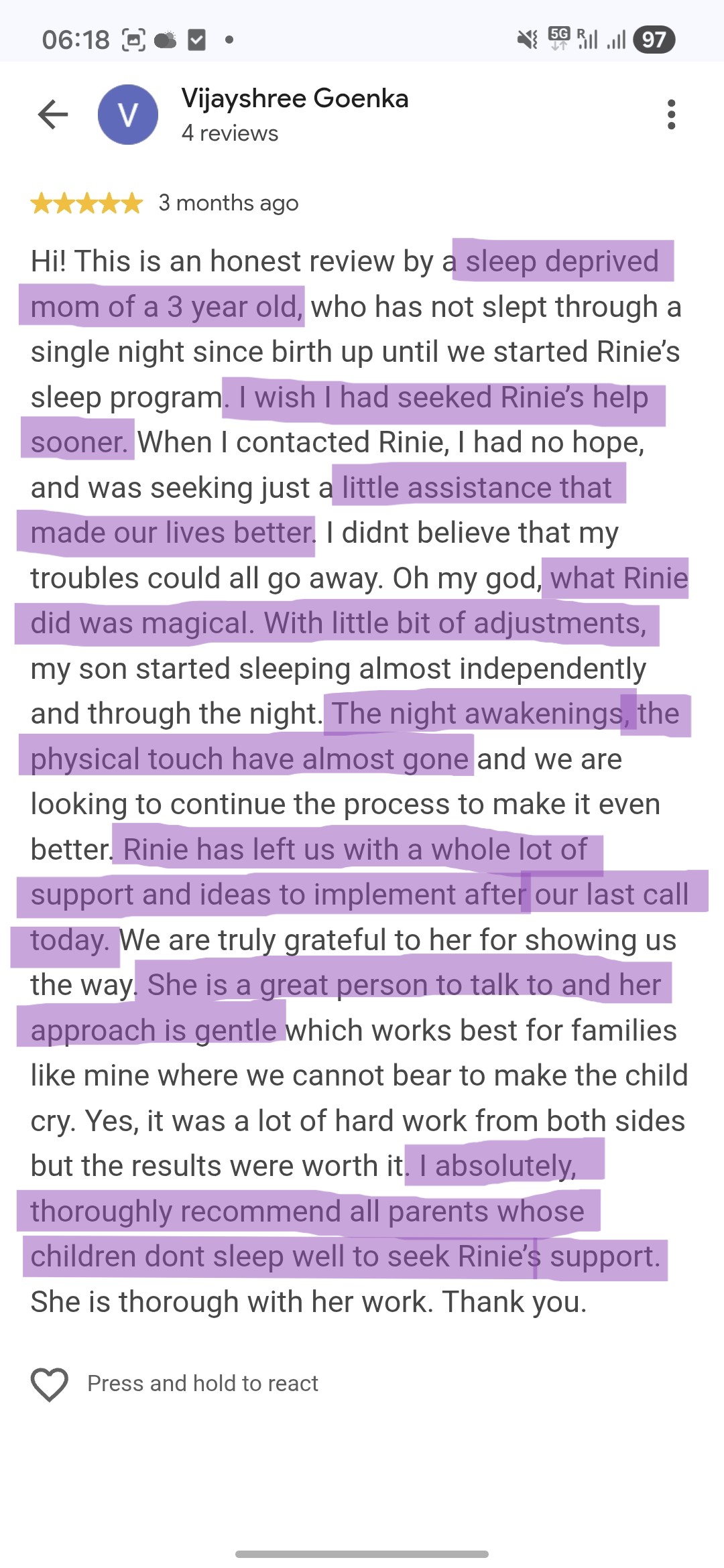
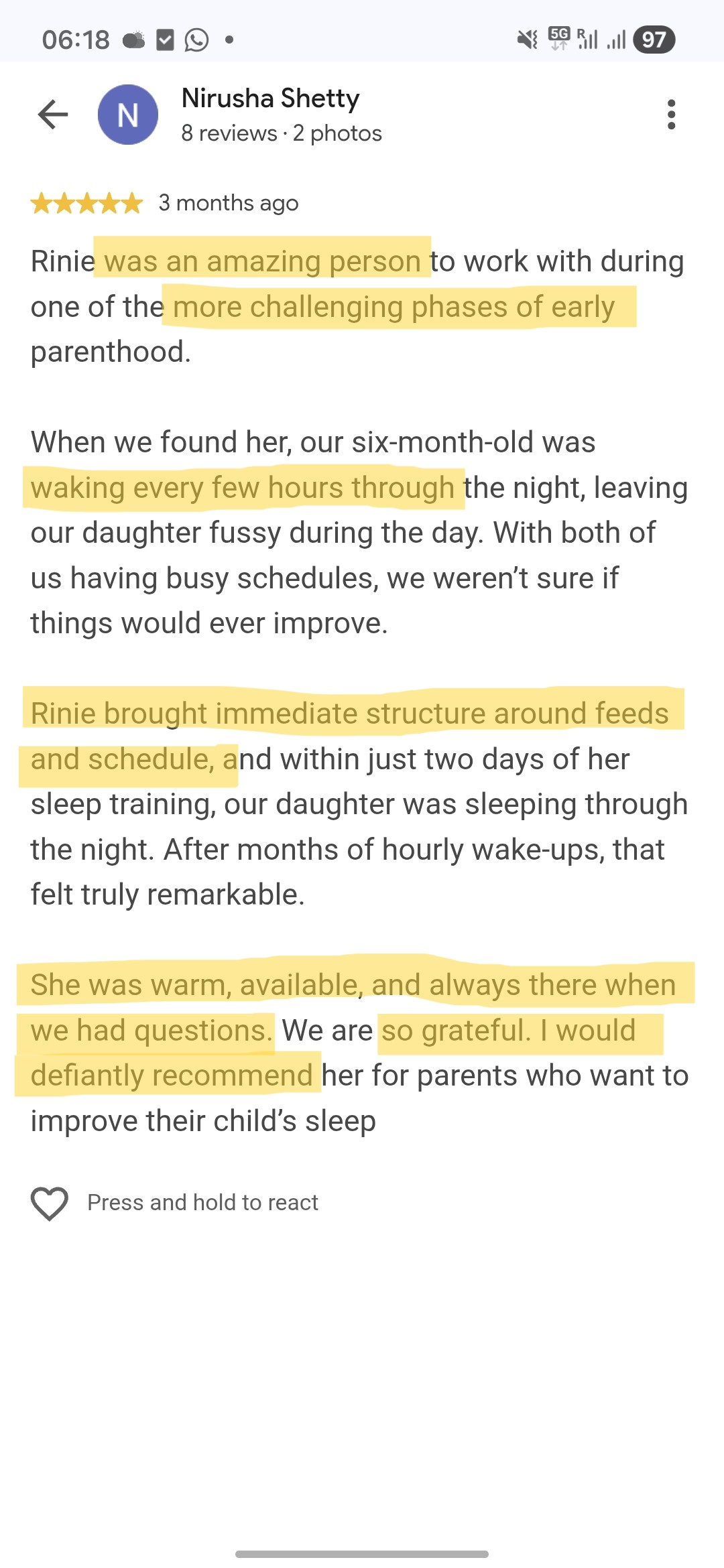
Look at our Reviews
Written By:


