Why Is My Newborn Awake for Hours at Night? 7 Common Reasons (And What to Do)
Jul 24, 2026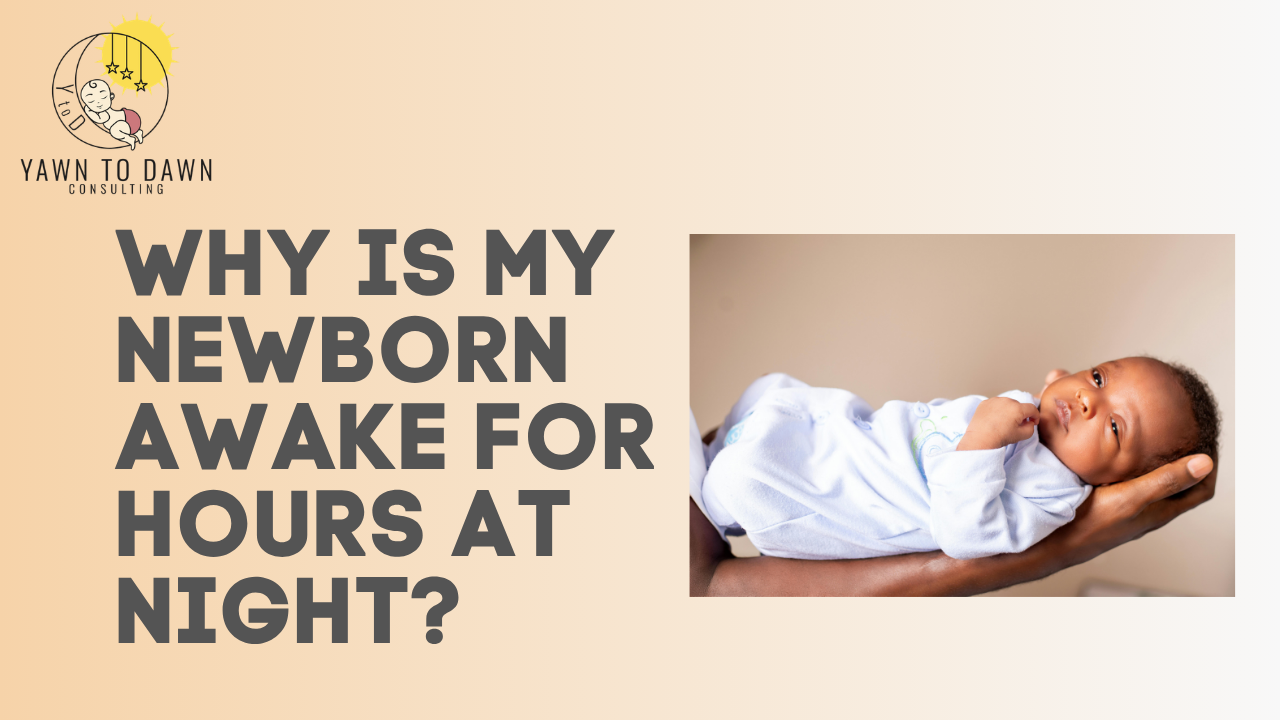
Have you ever looked at the clock at 2:00 AM, then 3:00 AM, only to realize your newborn is still wide awake?
You're rocking, feeding, shushing, bouncing, and wondering, "Why is my newborn awake for hours at night? Isn't this supposed to be when babies sleep?"
If this sounds familiar, you're not alone.
One of the biggest misconceptions about newborns is that they sleep all the time. While newborns do sleep 14 to 17 hours over 24 hours, they don't know when they're supposed to sleep. Their sleep is scattered throughout the day and night, and sometimes they can stay awake much longer than we'd expect.
The good news? In most cases, there's a reason behind it, and once you understand why it's happening, you can make gentle changes to help your newborn sleep better.
Is It Normal for a Newborn to Be Awake for Hours at Night?
Sometimes, yes.
During the first few weeks, newborns are still adjusting to life outside the womb. They haven't developed a circadian rhythm yet, which means they don't know the difference between day and night.
However, if your newborn is regularly staying awake for two to four hours at a time overnight, it's usually a sign that something is preventing them from settling back to sleep.

Let's look at the most common reasons.
1. Your Newborn Has Day-Night Confusion
This is one of the biggest reasons newborns stay awake for hours during the night.
Inside the womb, there was no difference between day and night. After birth, babies need time to develop their internal body clock.
This often means they'll sleep beautifully during the day but be wide awake at midnight, ready to party.
What can you do?
Help your baby learn the difference between day and night by:
- Keeping the house bright during the day.
- Going outside for natural daylight whenever possible.
- Keeping nighttime feeds calm, quiet, and dimly lit.
- Avoiding stimulating play during overnight wake-ups.
Most babies begin developing their circadian rhythm between 6 and 12 weeks.
2. They're Staying Awake Too Long
Many parents think their newborn isn't tired because they're wide awake.
Ironically, the opposite is often true.
Newborns can only comfortably stay awake for 35 to 90 minutes, depending on their age.
Once they stay awake beyond their wake window, stress hormones like cortisol begin to rise, making it much harder for them to fall asleep.
An overtired newborn often looks alert, fussy, and impossible to settle.
What can you do?
Watch your baby's wake windows rather than waiting until they're obviously exhausted.
Early sleep cues include:
- Looking away
- Red eyebrows
- Yawning
- Quiet staring
- Reduced activity
Catching these cues early often leads to much easier bedtimes.
3. Your Baby Is Hungry
Newborn stomachs are tiny.
Whether breastfed or formula-fed, most newborns need to feed every 2 to 3 hours, including overnight.
Sometimes what looks like "being awake for hours" is actually cluster feeding, especially during growth spurts.
Cluster feeding is completely normal and usually temporary.
4. Gas or Digestive Discomfort
If your newborn seems sleepy but keeps wriggling, grunting, arching their back, or pulling up their legs, discomfort could be waking them.
Their digestive system is still immature, making gas very common during the first few months.
After feeds, allow time for burping and keep your baby upright for 15 to 20 minutes if reflux is suspected.
5. Your Baby Is Overtired
Yes, overtiredness deserves its own section because it causes more sleep problems than most parents realize.
When babies become overtired, their bodies release cortisol and adrenaline to keep them awake.
Instead of falling asleep, they often become:
- Wide-eyed
- Fussy
- Difficult to soothe
- More awake than ever
Many parents assume this means their baby isn't tired.
In reality, they're often too tired to sleep.
6. Your Baby Is Getting Too Much Stimulation
Newborns are constantly learning.
Bright lights, loud conversations, visitors, toys, television, and even too much eye contact close to bedtime can make it difficult for them to switch off.
If your evenings feel busy, your baby may struggle to wind down.
Create a calm, predictable bedtime routine with dim lights, quiet voices, and gentle cuddles.
7. Your Expectations Are Based on Older Babies
This one is for parents.
Many families expect newborns to sleep long stretches overnight.
But newborn sleep is very different from infant sleep.
Frequent waking isn't necessarily a problem.
It's biologically normal.
What's important is helping your baby gradually develop healthy sleep habits while understanding what's age appropriate.
How to Help Your Newborn Sleep Better at Night
While you can't force a newborn to sleep through the night, you can help them sleep more peacefully by:
- Following age-appropriate wake windows.
- Offering full feeds during the day.
- Exposing your baby to natural daylight.
- Keeping overnight interactions calm and quiet.
- Creating a simple bedtime routine.
- Watching for early sleep cues before overtiredness sets in.
- Providing a safe, comfortable sleep environment.
Small changes often make a much bigger difference than parents expect.
When Should You Be Concerned?
Contact your pediatrician if your newborn:
- Is unusually difficult to wake for feeds.
- Has a fever.
- Refuses multiple feeds.
- Shows signs of illness.
- Cries inconsolably despite feeding and comforting.
- Has difficulty breathing or seems unwell.
If your baby is healthy, feeding well, and gaining weight, long periods of wakefulness are usually related to normal newborn sleep patterns rather than a medical issue.

Final Thoughts
If your newborn is awake for hours at night, it doesn't mean you're doing anything wrong.
More often than not, it's simply a sign that their sleep biology is still developing, or that a few small adjustments could make settling much easier.
Understanding why your baby is awake is the first step toward helping them sleep better.
If you've tried everything and your baby is still waking multiple times a night, taking short naps, or struggling to fall asleep, you don't have to figure it out alone. My 1:1 Sleep Training Program is designed to give you a personalized, step-by-step plan tailored to your baby's age, temperament, and your family's parenting style. Together, we'll address the root cause of your baby's sleep challenges and create healthy, independent sleep habits using gentle, evidence-based strategies. Book your 1:1 Sleep Training Program today, and let's help your whole family get the restful sleep you deserve.
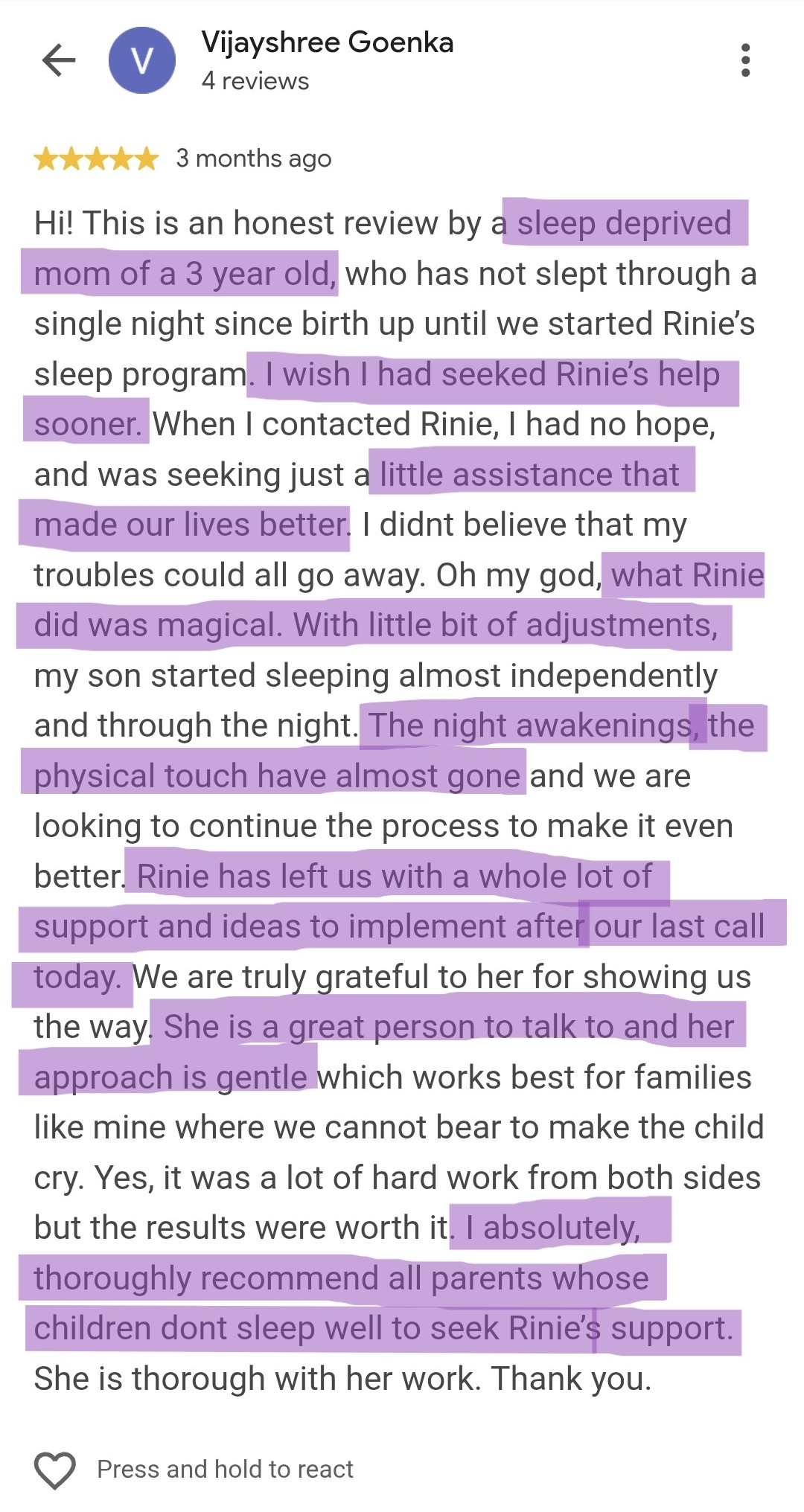
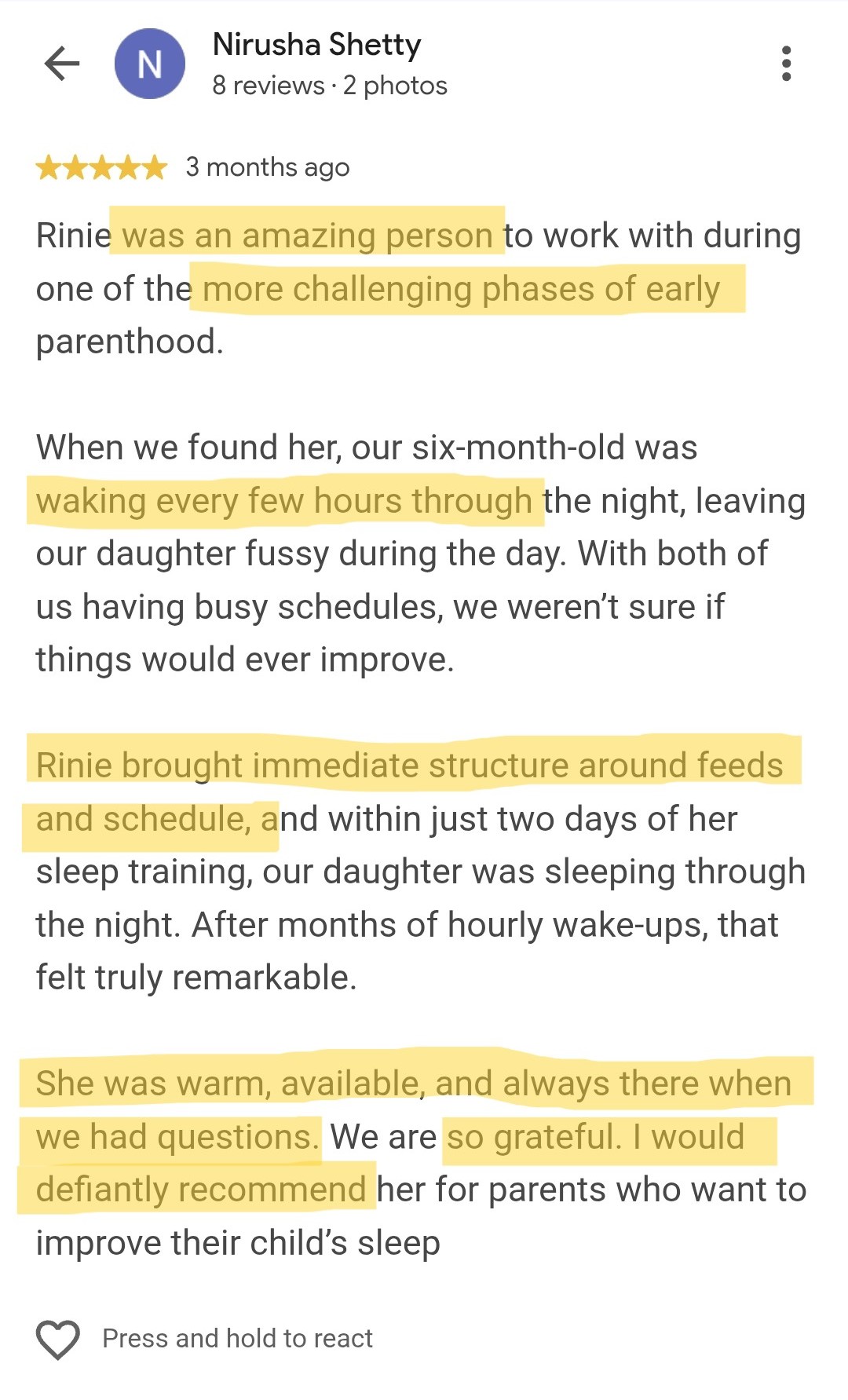
Look at our Reviews
Written By:

Rinie Gupta
Certified Pediatric Sleep Consultant & Founder @ Yawn to Dawn

Work With Me
Rediscover parenting as well rested moms & dads with expert-led sleep programs for newborns, infants and toddlers.
Recent Blogs
