Is Sleep Training Safe? What the Science Really Says
Jul 10, 2026
Parenting in the age of social media can feel overwhelming, especially when it comes to baby sleep.
Search for "sleep training" online and you'll quickly find two very different opinions. One side calls it a life-changing solution for exhausted families, while the other claims it's harmful and emotionally damaging for babies.
With so much conflicting advice, it's no surprise that many parents are left wondering what to believe.
As a certified pediatric sleep consultant, one of the questions I'm asked most often is, "Is sleep training actually safe?"
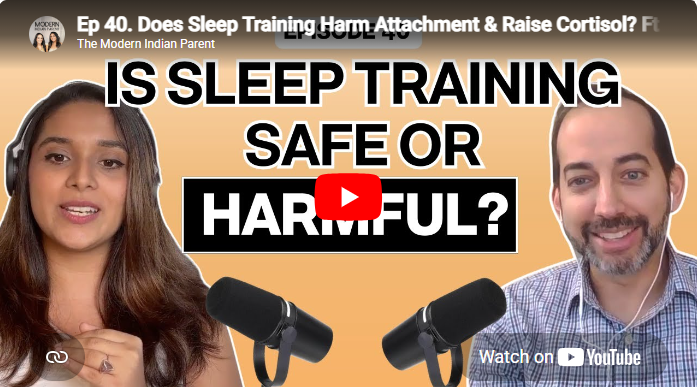
To answer this important question, I invited Dr. Sujay Kansagra, Pediatric Neurologist and Sleep Medicine Specialist, to join me on the Modern Indian Parent Podcast. Together, we discussed the most common myths surrounding sleep training, what the research actually tells us, and how parents can make informed decisions without fear or guilt.
If you'd prefer listening instead of reading, you can watch or listen to the full podcast episode using the link below.
The Sleep Training Debate on Social Media
Social media is filled with strong opinions about sleep training.
Some parents describe it as one of the best decisions they've ever made for their family. Others argue that it teaches babies to stop crying because they've learned that nobody is coming to comfort them.
The reality is that it has become increasingly difficult for parents to separate opinion from evidence.
As Dr. Kansagra points out, one of the biggest challenges parents face today is filtering through the endless amount of information available online. Emotional stories often spread much faster than scientific evidence, making it hard to know which advice is actually backed by research.
On one side, you'll find advocates who talk about the benefits of sleep training, including longer stretches of sleep, improved parental mental health, and better overall family well-being.
On the other side are claims that sleep training damages attachment, increases stress hormones, and causes long-term emotional harm.
When parents hear such opposing viewpoints, it's understandable that they feel anxious about making the "right" decision.
Rather than relying on opinions, let's look at what the scientific evidence actually says.
Why Is Sleep Training Uncommon in Indian Families?
Sleep training is still relatively uncommon in many Indian households.
Research from Bangalore found that the vast majority of Indian families co-sleep, with many parents sharing the same bed as their baby.
Because co-sleeping is deeply rooted in our culture, many parents grow up believing that it's the only acceptable way for babies to sleep.
If someone chooses a different approach, they may face criticism from family members or friends who believe babies should always be rocked, fed, or held to sleep.
As I shared during the podcast, sleep training isn't even presented as an option for many Indian parents. Instead, parents are often made to feel guilty for considering independent sleep.
Dr. Kansagra, who also comes from a South Asian background, understands these cultural expectations. However, he reminds parents that just because something is common doesn't automatically make it the only right choice.
Every family is different.
Some families enjoy co-sleeping and it works beautifully for them.
Others may be struggling with severe sleep deprivation, multiple night wakings, or balancing work and caring for other children.
Neither situation is right or wrong.
The goal isn't to tell parents which choice they should make. It's to ensure they have access to accurate, evidence-based information so they can make the decision that's best for their own family.
Claim #1: "Sleep Training Teaches Babies to Stop Crying, Not Sleep"
One of the most common criticisms of sleep training is that babies don't actually learn to sleep independently.
Instead, some people claim that babies simply stop crying because they've learned that nobody will respond to them.
This idea is often linked to the concept of "learned helplessness."
However, Dr. Kansagra explains that this argument doesn't reflect what we see in real life.
If babies truly believed nobody was coming to help them, they wouldn't cry when they were hungry, uncomfortable, frightened, or unwell.
But that's not what happens.
Sleep-trained babies continue communicating their needs throughout the day and night, just like every other baby.
The difference is that they gradually learn to settle themselves back to sleep when they experience the normal brief awakenings that happen between sleep cycles.
It's also important to remember that sleep training isn't simply about leaving a baby to cry.
There are many evidence-based sleep training methods, and most involve gradually reducing parental assistance while continuing to respond to a baby's genuine needs.
If you're interested in learning more about the different approaches, you may also enjoy reading my blog on What Is the Best Sleep Training Method?, where I explain the most commonly used methods and when each may be appropriate.
Claim #2: "Babies Cannot Learn to Self-Soothe"
Another common claim is that babies are neurologically incapable of learning to self-soothe because the part of the brain responsible for emotional regulation hasn't fully developed.
While this statement sounds convincing, it's often taken out of context.
As Dr. Kansagra explains, scientific terms like "prefrontal cortex" are frequently mentioned online without a full understanding of what they actually mean.
Research shows that even very young babies are capable of briefly waking between sleep cycles and returning to sleep without parental intervention.
In fact, some babies naturally begin sleeping for longer stretches within the first few months of life.
This doesn't mean they never wake.
It simply means they're able to settle themselves back to sleep.
It's also important to understand what self-soothing actually means.
It doesn't mean expecting a baby to cope with hunger, fear, or discomfort on their own.
It simply refers to a baby's ability to return to sleep after a normal night waking without needing the exact same sleep association every time.
Some babies develop this skill naturally.
Others benefit from gentle guidance as they grow.
If you'd like to understand how sleep associations influence night wakings, you may also find my blog The Complete Guide to Baby Sleep Associations helpful.
Claim #3: "Babies Will Sleep Through the Night When They're Ready"
Another piece of advice parents hear all the time is, "Just wait. Your baby will sleep through the night when they're ready."
While that can certainly be true for some babies, it's not true for all.
As Dr. Kansagra points out, the challenge with this advice is that nobody can tell you when "ready" will actually be.
It could be in a few weeks.
It could be several months from now.
Or it could take years.
Many parents keep waiting because they're told things will naturally improve at six months, then one year, then two years. For some families, that happens. For others, frequent night wakings continue well beyond toddlerhood.
The reality is that every baby develops differently.
Some babies naturally begin sleeping for longer stretches with very little support, while others continue relying on sleep associations that lead to frequent night wakings.
Waiting is certainly a valid choice if it's working for your family.
However, if ongoing sleep deprivation is affecting your mental health, your relationship, or your ability to function during the day, it's equally valid to seek support.
Sleep training isn't about forcing independence.
It's about giving families another option when waiting no longer feels sustainable.
Claim #4: "Sleep Training Is Traumatic"
Perhaps the strongest criticism of sleep training is that it's emotionally harmful.
Many parents worry that allowing their baby to cry, even briefly, could damage their attachment or create lasting emotional trauma.
It's an understandable concern because every parent wants to protect their child.
But what does the research actually show?
As Dr. Kansagra explains, this is where it's important to separate emotion from evidence.
Despite how frequently this claim is shared online, there are no high-quality studies showing that age-appropriate sleep training causes trauma or harms a child's emotional development.
In fact, multiple long-term studies have followed families after sleep training and found no negative effects on attachment, behaviour, or emotional well-being.
Instead, researchers found improvements in infant sleep, parental mental health, and overall family well-being.
Many parents understandably associate crying with harm.
However, short-term frustration isn't the same as trauma.
Babies cry for many different reasons throughout the day. They cry during vaccinations, while waiting for milk to warm up, when they're placed in the car seat, or when they're frustrated because they can't reach a toy.
Those experiences aren't considered traumatic because they happen within the context of a safe, loving, and responsive relationship.
Sleep training should be viewed in the same way.
When done using an evidence-based, age-appropriate approach, it isn't about ignoring your baby's needs. It's about helping them develop the skill of falling asleep independently while continuing to respond appropriately when they genuinely need you.
If you've ever worried about whether sleep training affects attachment, you may also enjoy reading my blog Will Sleep Training Affect Attachment?, where I explore the research in greater detail.
Claim #5: "Sleep Training Increases Cortisol and Toxic Stress"
Another claim that often appears on social media is that sleep training raises cortisol, the body's primary stress hormone, leading to toxic stress and long-term emotional harm.
This idea understandably sounds frightening to parents.
However, according to Dr. Kansagra, the evidence simply doesn't support it.
One of the biggest misconceptions comes from a study that wasn't actually designed to evaluate sleep training at all.
The research observed babies in a hospital setting after being separated from their mothers. It did not compare cortisol levels before and after sleep training, nor did it examine babies learning to sleep independently at home.
Unfortunately, the findings from that study have often been taken out of context and applied to sleep training, even though they don't measure the same thing.
More recent research has looked specifically at babies before and after sleep training.
Rather than showing an increase in cortisol, these studies found that cortisol levels remained stable and, in some cases, even decreased over time as babies began sleeping for longer, more restorative stretches.
Better sleep supports healthier emotional regulation for both babies and parents.
A well-rested baby is often more settled, more engaged, and better able to cope with everyday challenges.
Likewise, well-rested parents are generally more patient, emotionally available, and responsive to their child's needs.
This is an important reminder that supporting healthy sleep isn't only beneficial for babies. It benefits the entire family.
Claim #6: "Sleep Training Harms Parent-Child Attachment"
One of the biggest fears parents have is that sleep training will weaken the bond they share with their baby.
This concern often comes from the belief that if a baby cries and a parent doesn't respond immediately, the baby will stop trusting their caregiver or develop an insecure attachment.
Fortunately, the research tells a very different story.
As Dr. Kansagra explained during our conversation, several long-term studies have followed families years after sleep training and found no difference in attachment security between children who were sleep trained and those who were not.
In other words, sleep training has not been shown to damage the parent-child relationship.
Attachment is built through thousands of loving, responsive interactions that happen every single day. Feeding your baby when they're hungry, comforting them when they're upset, playing together, talking, cuddling, and responding to their needs all contribute to a secure attachment.
One small part of the day, such as bedtime, does not define your relationship with your child.
In fact, better sleep often allows parents to be more emotionally available during the day. When parents are less exhausted, they usually have more patience, more energy, and more opportunities to enjoy positive interactions with their baby.
Parental well-being is an important part of the conversation too.
Chronic sleep deprivation has been linked with an increased risk of postpartum depression, anxiety, stress, and burnout. When parents are running on very little sleep for months or even years, it becomes harder to be fully present for their children.
Supporting healthy sleep isn't just about helping babies.
It's also about supporting the mental health and well-being of the entire family.
Handling Family Pushback on Sleep Training
For many parents, deciding whether or not to sleep train isn't the hardest part.
Explaining that decision to family members can be even more challenging.
In many Indian households, babies are traditionally rocked to sleep, fed to sleep, or encouraged to co-sleep for several years. Because these practices are so deeply rooted in our culture, parents who choose a different approach may receive criticism from relatives who believe sleep training is unnecessary or even harmful.
Interestingly, Dr. Kansagra shared that even his own parents were initially against sleep training.
It wasn't until they saw the positive changes in their grandchild's sleep and the overall improvement in family well-being that their perspective changed.
This is an important reminder that not everyone will understand your parenting decisions, and that's okay.
If you've taken the time to educate yourself, understand the evidence, and choose an approach that aligns with your family's values and goals, you don't need to justify your decision to everyone around you.
Every family is different.
What works beautifully for one family may not be the right choice for another.
The goal isn't to meet someone else's expectations. It's to create an environment where both your baby and your family can thrive.
The Bottom Line
The conversation around sleep training is often driven by emotion, personal experiences, and social media opinions. While everyone's parenting journey is unique, it's important to remember that opinions are not the same as scientific evidence.
The research available today consistently shows that age-appropriate, evidence-based sleep training does not harm attachment, increase toxic stress, or negatively affect a child's emotional development. Instead, it has been shown to improve infant sleep, support parental mental health, and contribute to better overall family well-being.
That doesn't mean every family needs to sleep train.
Nor does it mean sleep training is the only way to achieve healthy sleep.
The best approach is the one that aligns with your baby's needs, your parenting values, and your family's circumstances. Every parent deserves to make that decision based on facts rather than fear.
If you're feeling overwhelmed by conflicting advice or struggling with bedtime battles, frequent night wakings, or short naps, you don't have to navigate it alone.
Through my Personalized Sleep Programs, I work one-on-one with families to create gentle, evidence-based sleep plans tailored to each baby's age, temperament, feeding needs, and developmental stage. Together, we'll build healthy sleep habits that help your baby sleep better while giving your whole family the rest you deserve.
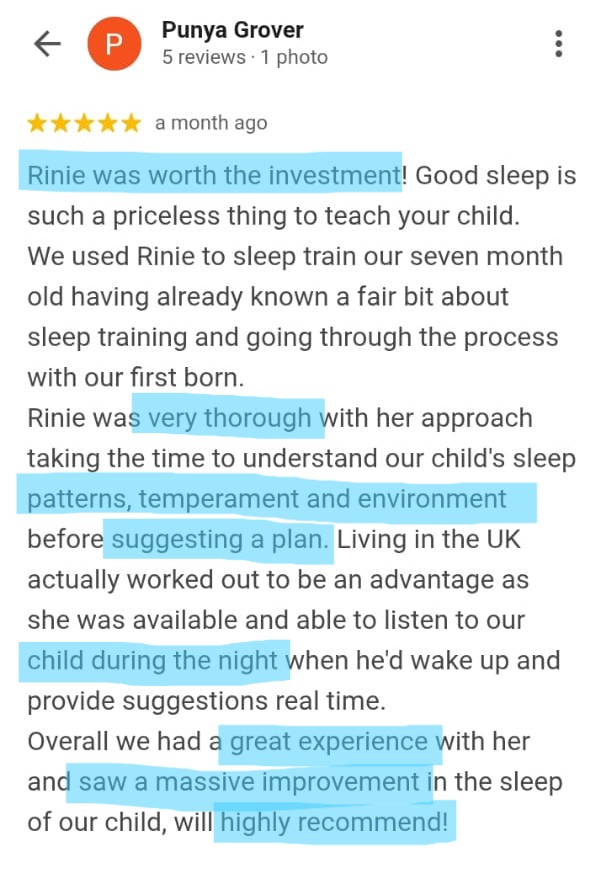
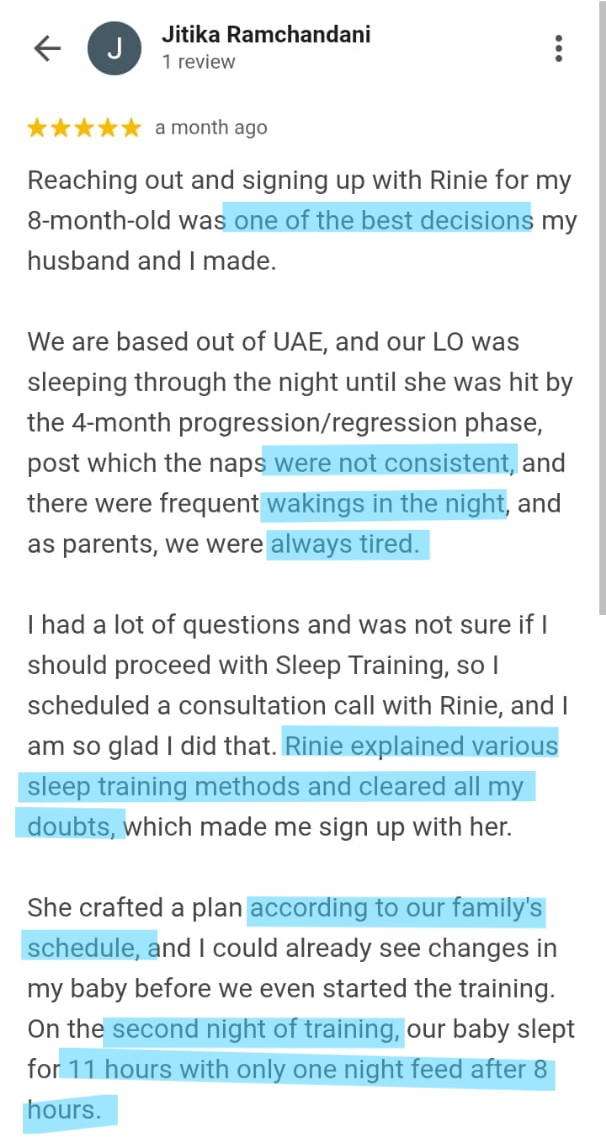
Look at our Reviews
Written By:


