How Long Does Sleep Training Really Take? A Realistic Night-by-Night Timeline
Aug 05, 2026
One of the first questions parents ask me before they decide to sleep train is:
"How long will this take?"
It's a completely fair question.
When you've been surviving on broken sleep for weeks or months, you're not just looking for a solution. You're also trying to decide whether you have the energy to begin. You want to know when you'll finally start getting longer stretches of sleep and whether the effort will actually pay off.
Unfortunately, this is where the internet can be misleading.
You'll often come across headlines promising results in three days or one weekend. While some babies do adapt that quickly, those stories don't represent every family. Every baby learns differently, and sleep training is never about forcing a child to sleep overnight. It's about helping them develop the skill of falling asleep independently.
As a certified pediatric sleep consultant, I always encourage parents to focus on realistic expectations rather than unrealistic promises. Some babies learn quickly, while others need a little longer to adjust. Both journeys are completely normal.
So, what does a realistic sleep training timeline actually look like?
Let's walk through it together.
What Does Sleep Training Success Really Mean?
Progress Comes Before Perfection
Many parents believe that successful sleep training means their baby immediately sleeps for eleven or twelve uninterrupted hours.
In reality, that's rarely the first sign that things are improving.
Most families notice smaller changes first. Bedtime becomes calmer. Your baby begins falling asleep more easily without needing to be rocked, bounced or fed completely to sleep. Night wakings often become shorter, and when your baby does wake, they may start settling themselves back to sleep instead of needing your help every single time.
These early improvements are incredibly important because they show your baby is beginning to learn one of the most valuable sleep skills, connecting sleep cycles independently.
Success also looks different for every family.
For one family, success may be reducing hourly night wakings to just one feed. For another, it may simply mean bedtime no longer takes ninety exhausting minutes every evening.
Instead of comparing your progress to someone else's, focus on how far your own baby has come. Sleep training is about steady progress, not instant perfection.
Why Every Baby Has a Different Sleep Training Timeline
Your Baby's Age, Temperament and Sleep History All Matter
One of the biggest mistakes parents make is comparing their baby's progress with another child.
The truth is that every family begins sleep training from a different starting point.
Some babies already have a predictable bedtime routine but rely on feeding or rocking to fall asleep. Others wake every hour because they have several sleep associations that they've depended on for months. Naturally, these babies may need a little longer to adjust.
Age also plays an important role.
A six-month-old who is developmentally ready for sleep training often learns differently from an eighteen-month-old who has been co-sleeping or feeding to sleep for over a year. Older babies aren't harder to sleep train, but they have simply had more time to practise their current sleep habits.
Temperament matters just as much.
Some babies embrace change quite easily and adapt within a few nights. Others are naturally more sensitive and need additional reassurance before they feel comfortable with a new routine. Neither temperament is better than the other. It simply means your baby's journey is unique.
This is why I always tell parents not to compare timelines. Your baby's progress should only be compared with where they started, not with another family's experience online.
Night One: The Biggest Adjustment
Expect Bedtime to Feel Different
For most families, the first night is the biggest adjustment.
Your baby has suddenly realised that bedtime no longer looks the way it always has. If they've spent months falling asleep while feeding, rocking, bouncing or being held, they'll naturally notice when that routine changes.
It's completely normal for babies to protest.
Crying during the first night doesn't mean sleep training isn't working. It simply means your baby is expressing frustration while learning a completely new way of falling asleep.
Think about learning any new skill as an adult. Whether it's driving a car, learning to swim or starting a new job, the beginning usually feels uncomfortable. That discomfort doesn't mean you're failing. It means you're learning.
The same is true for your baby.
At the same time, the first night is often more emotional for parents than it is for children. Many parents question whether they're doing the right thing or wonder if they should stop altogether.
These feelings are completely normal.
This is exactly why I encourage parents to begin sleep training only when they feel ready to stay consistent. The goal of the first night isn't perfect sleep. It's simply introducing a new bedtime routine and allowing your baby to begin developing an important lifelong skill.
Night Two: Progress Isn't Always Linear
Trust the Process, Even If Improvement Isn't Immediate
Many parents expect Night Two to be dramatically easier than Night One.
Sometimes it is.
Sometimes it isn't.
Some babies settle more quickly, while others cry for a similar amount of time or even protest a little more before things begin improving.
This can be discouraging if you were expecting instant results, but it's actually a very normal part of the learning process.
Learning is rarely a straight line.
Your baby is beginning to understand that bedtime has changed, but they haven't fully mastered their new sleep skills yet. Just because you don't see dramatic improvement after one night doesn't mean sleep training isn't working.
The most important thing during this stage is consistency.
When your bedtime routine stays predictable each evening, your baby gradually begins to understand what comes next. That predictability creates a sense of security, making it easier for them to learn independent sleep over the coming days.
Many families are surprised by how quickly bedtime begins feeling calmer once they move past these first two nights.
Night Three: The First Signs of Progress
Small Changes Often Mean Big Progress
By the third night, many parents begin noticing the first encouraging signs that sleep training is working.
Your baby may cry for a shorter period before falling asleep. They may wake fewer times overnight or settle back to sleep more quickly after waking. Sometimes the changes are subtle, but they are still meaningful.
For example, bedtime that once took an hour may now take thirty minutes. Your baby may wake briefly between sleep cycles but no longer need to be rocked or fed every single time. These improvements show that your baby is beginning to understand how to fall asleep independently.
Remember, sleep training is rarely one dramatic breakthrough. It's usually a series of small wins that gradually build into lasting change.
If you're feeling discouraged, try looking back at where you started instead of focusing only on where you want to be. Progress is often easier to see when you compare today's bedtime with last week's.
Nights Four to Seven: New Sleep Habits Begin to Form
Consistency Starts Paying Off
By the end of the first week, bedtime usually feels much calmer.
Your baby begins recognising the bedtime routine as a predictable sequence of events. Whether it's a bath, pajamas, a feed, a bedtime story, or cuddles, these familiar steps become powerful sleep cues that tell your baby's brain it's time to wind down.
Many parents also notice that bedtime crying becomes shorter or disappears altogether.
While every baby progresses differently, this is often the stage where families begin feeling hopeful because bedtime no longer feels like a daily struggle.
Longer Sleep Stretches Usually Follow
One common misconception is that sleep training immediately eliminates every night waking.
That's not always the case.
Depending on your baby's age, they may still need one or two night feeds, especially if they're younger than eight or nine months. Sleep training teaches babies how to fall asleep independently, but it doesn't remove genuine hunger.
The exciting part is that once babies learn to settle themselves between normal sleep cycles, they often begin sleeping for much longer stretches naturally.
This means that even if your baby still wakes to feed, they are less likely to wake repeatedly simply because they need rocking, feeding, or patting to return to sleep.
What Happens During Week Two?
Sleep Starts Feeling More Predictable
By the second week, many families notice that sleep begins feeling much more consistent.
Bedtime becomes easier, overnight wakings continue to reduce, and babies often fall asleep with much greater confidence.
Parents also start feeling more confident.
Instead of wondering what to do each evening, they have a predictable routine that works for their family.
This doesn't mean every night will be perfect.
Babies are human, just like adults. Some nights they'll sleep better than others.
The difference is that occasional difficult nights no longer feel like the norm.
Confidence Replaces Guesswork
One of the biggest changes I see isn't just in babies.
It's in parents.
Instead of constantly second-guessing themselves, parents begin understanding their baby's sleep cues, knowing when to respond, and feeling confident that they have a plan.
That confidence often makes the entire household feel calmer.
What Can Make Sleep Training Take Longer?
Illness and Developmental Changes
Sleep training doesn't happen in isolation.
Babies continue growing, developing, teething, and occasionally getting sick.
If your baby develops a fever, an ear infection, or another illness, it's perfectly appropriate to pause sleep training while they recover. During these times, comfort and responsiveness always come first.
Developmental milestones can also temporarily affect sleep.
Learning to roll, crawl, pull up, or walk often leads to temporary disruptions because your baby's brain is busy practising new skills.
These phases are usually short-lived and don't mean you've lost all your progress.
Inconsistency Can Slow Progress
The biggest reason sleep training takes longer than expected is inconsistency.
If bedtime changes every night or different caregivers respond in completely different ways, your baby receives mixed messages about what to expect.
This can make learning more confusing and delay progress.
Consistency doesn't mean perfection.
It simply means responding in a predictable way that allows your baby to understand the new routine.
How Do You Know Sleep Training Is Working?
Look Beyond Sleeping Through the Night
Parents often focus on one goal: sleeping through the night.
While that's certainly exciting when it happens, it's not the only sign that sleep training is working.
You may notice:
-
Your baby falls asleep more independently.
-
Bedtime takes less time.
-
Night wakings become less frequent.
-
Your baby settles more quickly after waking.
-
Naps become more predictable.
-
Your baby wakes happier and more well-rested.
These changes are all signs that your baby is developing healthy sleep skills.
Celebrate them.
They're important milestones on the journey toward better sleep
The Bottom Line
Every Baby Learns at Their Own Pace
So, how long does sleep training really take?
For many families, meaningful improvements begin within the first few nights, with significant progress often happening during the first one to two weeks.
But remember, every baby is different.
Some babies adapt quickly.
Others need a little more time, patience, and consistency.
Neither timeline is right or wrong.
The goal isn't to rush the process.
The goal is to help your baby develop healthy sleep habits that will benefit them for years to come.
If you're feeling overwhelmed and aren't sure where to begin, you don't have to figure it out on your own.
Through my Personalized Baby Sleep Training Program, I work one-on-one with families to create a sleep plan tailored to their baby's age, temperament, feeding needs, and sleep challenges. You'll receive step-by-step guidance, ongoing support, and practical strategies that help your baby learn to sleep independently while feeling supported every step of the way.
If you're ready to enjoy calmer bedtimes and more restful nights, I'd love to help you get there.
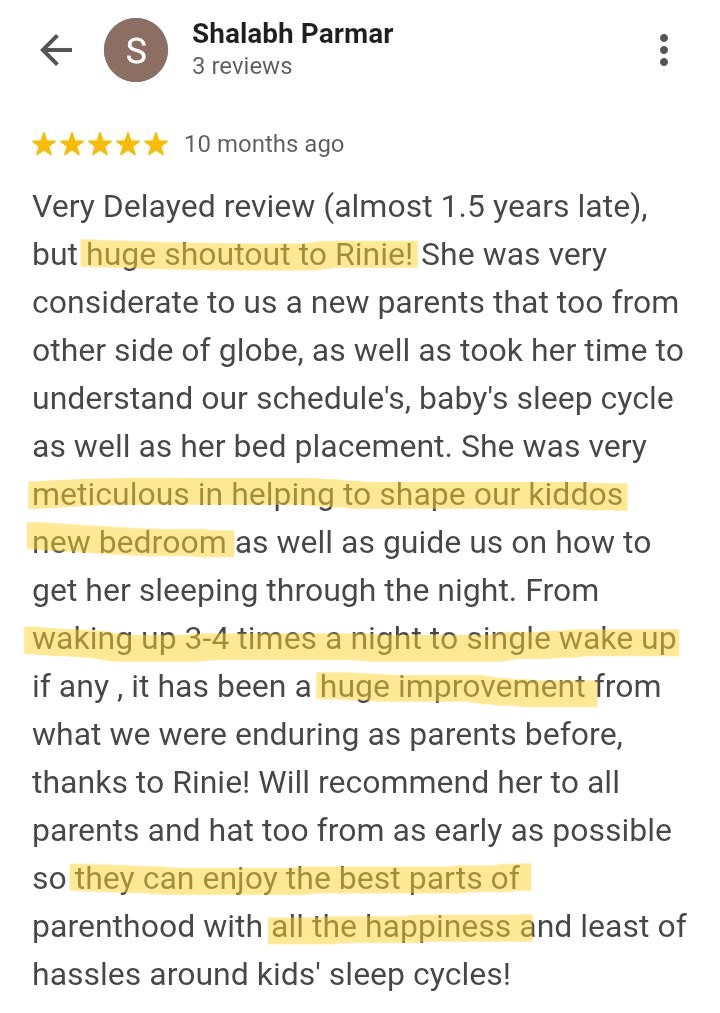
Look at our Reviews

Written By:


