How to Stop Co-Sleeping and Make Your Child Sleep in Their Own Bed
Jun 15, 2026
If you’ve been co-sleeping and now want your baby or toddler to sleep in their own bed, you’re not alone.
Many Indian and Asian families start with co-sleeping because it feels convenient, comforting, or simply expected. But at some point, most parents realise:
“We all sleep better when my child sleeps in their own space.”
The good news?
You can transition your baby out of co-sleeping gently, respectfully, and without hours of crying.
Here’s exactly how to do it.

Why Is It So Hard to Stop Co-Sleeping?
Your Child Has Learned That Sleep = Parent Presence
When babies fall asleep next to you every night, your smell, touch, warmth, and breath become part of their sleep association.
So naturally, when they wake in a light sleep cycle, they look for you.
This is why co-sleeping babies often:
-
Wake frequently
-
Need constant contact
-
Struggle with independent sleep
-
Take longer to fall asleep
-
Cry when placed in a separate bed
The goal isn’t to take comfort away. The goal is to transfer comfort to a safe, consistent sleep space.
If you're wondering whether co-sleeping is "wrong" or feeling guilty about making this transition, read:
Is It Wrong to NOT Co-Sleep with Your Baby? An Indian Mom’s/Sleep Expert’s Perspective
Step-by-Step Guide to Stop Co-Sleeping (Gentle Transition)
Step 1: Start With Daytime Sleep
If your baby still naps on you or next to you, begin shifting naps to:
-
A cot
-
Crib
-
Floor bed
-
Playpen
-
Bassinet (for younger babies)
Daytime is easier because babies are less attached and more flexible.
The more naps your baby takes independently, the smoother your night transition will be.
Step 2: Create a Predictable Bedtime Routine
A familiar, calming routine helps your child feel secure.
Example:
-
Bath
-
Pajamas
-
Feed
-
Book
-
White noise
-
Bedtime phrase (“It’s sleepy time, love.”)
When the routine stays the same, sleep becomes predictable, even in a new space.
For a detailed guide on creating a calming routine that sets your child up for success, read:
How to Create a Bedtime Routine That Helps Your Baby Sleep Peacefully
Step 3: Start With a “Sidecar” Transition (If Needed)
For babies who panic when separated, you can make gradual steps:
-
Move a crib next to your bed (“sidecar” style)
-
Let your baby sleep in the crib but close to you
-
After a few days, increase distance or move the crib slightly away
-
Once baby is settled, shift the crib to their own room or further from your bed
This smooth transition works well for high-contact babies.
Step 4: Teach Baby to Fall Asleep in Their Own Bed
This is the most important part.
You can choose a gentle method depending on your child’s age and temperament.
Option 1: Chair Method
Best for babies 6 months–4 years.
-
Sit next to the crib/bed
-
Offer comfort through words and presence
-
Reduce involvement over a few nights
-
Move the chair further away gradually
Option 2: Pick Up Put Down (Younger Babies)
-
Pick up to calm
-
Put down awake
-
Repeat until baby falls asleep
Option 3: Stay-and-Support
-
Sit beside your baby
-
Pat/shush intermittently
-
Reduce your help slowly each night
No method involves leaving your child to “cry it out.”
You stay close, supportive, and responsive.
Step 5: Be Consistent at Night Wakings
Whatever method you use at bedtime, use the same one at night.
If you:
Start bedtime in the crib
but
Bring baby to your bed at 2 AM
the transition will stretch on for weeks.
Consistency equals faster results.
Step 6: Make Their Room Sleep-Friendly
Your child’s new sleep space should feel safe and comfortable.
Checklist:
-
Dark room
-
White noise
-
Cool temperature (22–24°C)
-
Firm safe mattress
-
No pillows/blankets for babies under 1 year
-
Night light only if they are scared
Safe space equals smooth transition.
How Long Does the Transition Take?
Most families I work with see:
-
Better bedtime within 2–3 nights
-
Less night waking within 3–5 nights
-
Full transition to own bed within 1–2 weeks
Babies adapt faster than we expect, as long as the approach is gentle and consistent.
What If My Child Cries?
Crying is communication, not distress.
Your child may say:
“This is new.”
“This is different.”
“I don’t know this yet.”
Stay close, reassure them, and guide them through the new routine.
They will adjust and thrive.
Ready to Help Your Baby Sleep Independently?
If co-sleeping has become exhausting and you need a personalised plan, I’d love to guide you.
My Personalised Sleep Training Program includes:
-
A customised transition plan
-
Age-appropriate routines
-
Gentle, responsive steps
-
Daily WhatsApp guidance
-
Real-time support through night wakings
👉 Start your gentle co-sleeping transition:
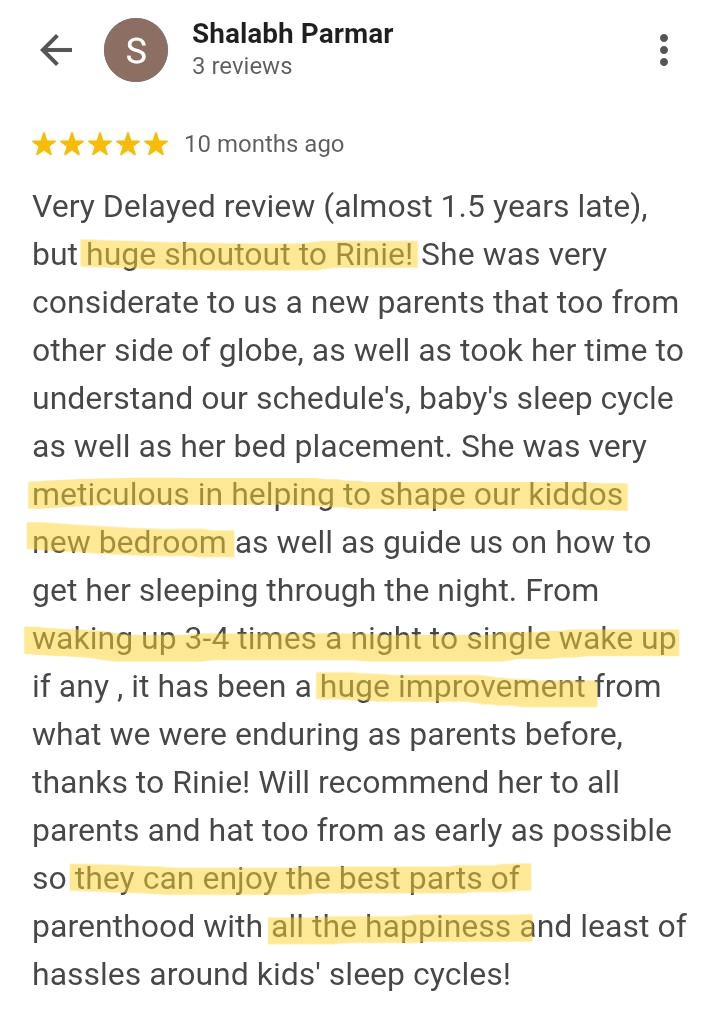
Look at our Reviews

Written By:


