Is Rocking or Feeding to Sleep a Bad Habit?
Feb 19, 2026
Many parents ask:
Am I “spoiling” my baby by rocking or feeding them to sleep?
The short answer: no, it’s not a bad habit but it can become a sleep association that affects independent sleep over time.
Let’s explore what this really means.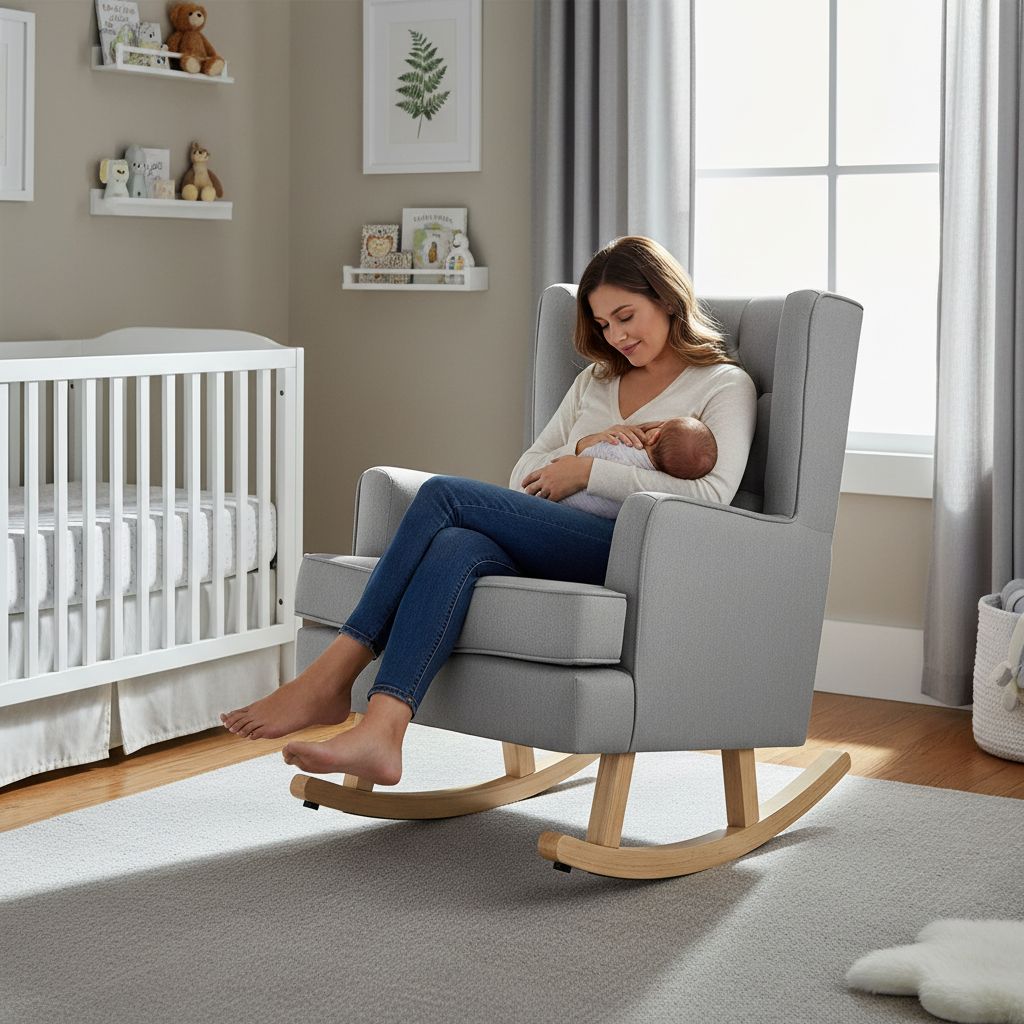
Understanding Sleep Associations
A sleep association is a condition or action your baby relies on to fall asleep. Common examples include:
- Rocking
- Feeding
- Patting
- Using a pacifier
These are completely normal ways for babies to feel safe and fall asleep.
The concern arises only if the baby can’t fall asleep without them, leading to:
- Frequent night wakings
- Difficulty resettling independently
- Short or fragmented naps
When Rocking or Feeding Becomes Problematic
It’s not the act itself it’s dependence on it for every sleep cycle:
- Night Wakings
Babies wake in the night naturally. If they need the same cue to sleep, they may cry for help every time. - Short Naps
During daytime naps, dependence on rocking or feeding can limit nap length because parents may not be available to help each time. - Parent Exhaustion
Constantly providing sleep cues can become draining, especially if your baby wakes frequently.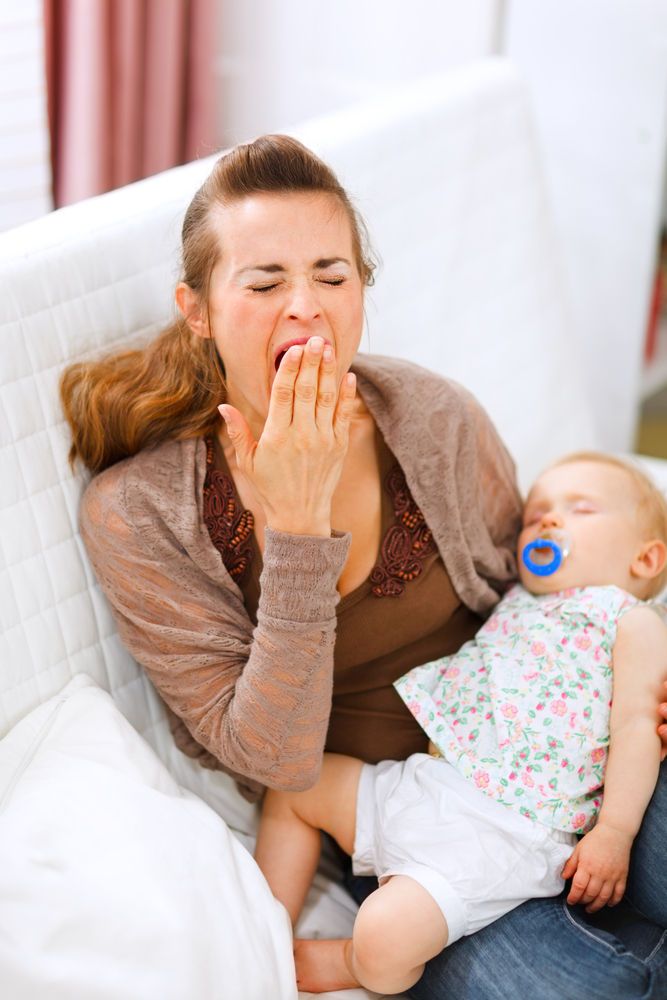
How to Transition Gently
The goal is independent sleep, not to eliminate comforting routines entirely.
1. Introduce Partial Independence
- Put the baby down drowsy but awake
- Gradually reduce rocking or feeding over time
2. Maintain Comfort
- Use soft touch, gentle patting, or calming voice
- Keep routines consistent: dim lights, lullabies, white noise
3. Respect Developmental Stage
- Newborns naturally need feeding and rocking
- Older babies (4–6 months+) can learn to self-soothe gradually
4. Avoid Abrupt Changes
- Sudden removal of sleep cues can cause stress for both baby and parent
- A step-by-step approach works best
Key Takeaway
Rocking or feeding to sleep isn’t inherently bad.
The challenge arises if your baby can’t sleep without it. With gentle guidance and gradual transitions, babies can learn to fall asleep independently, while parents maintain a calm, supportive bedtime routine.
1:1 Baby Sleep Training Support
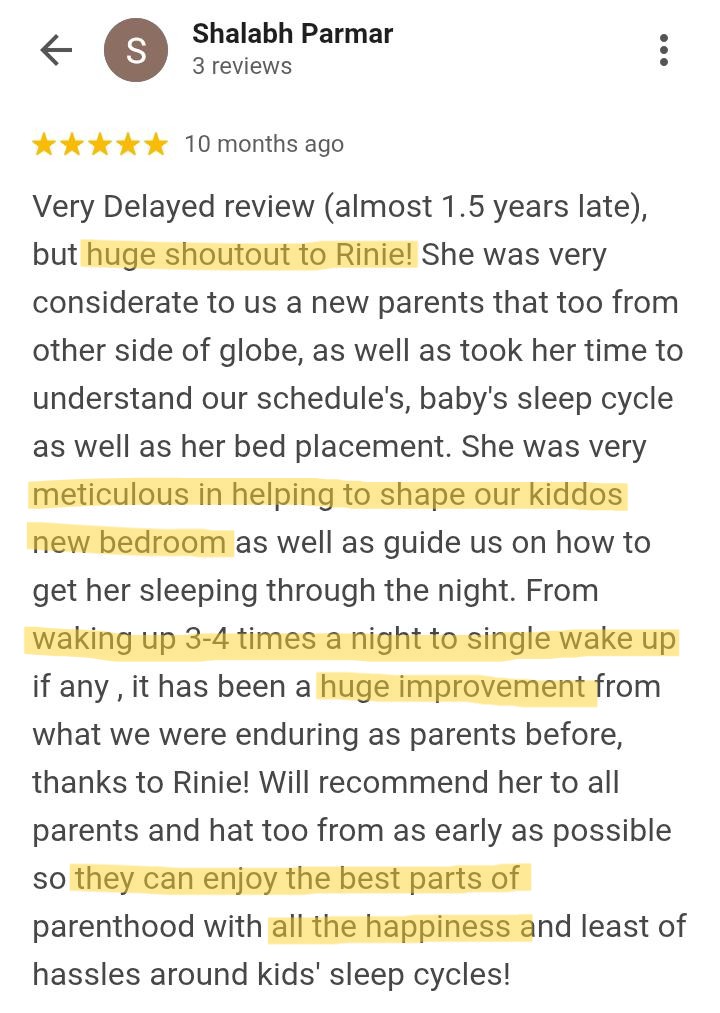
If you need personalised guidance, Rinie’s 1:1 sleep training helps parents:
- Analyse current sleep associations
- Implement gentle transitions
- Build sustainable, peaceful sleep habits
👉 Explore 1:1 baby sleep training here:
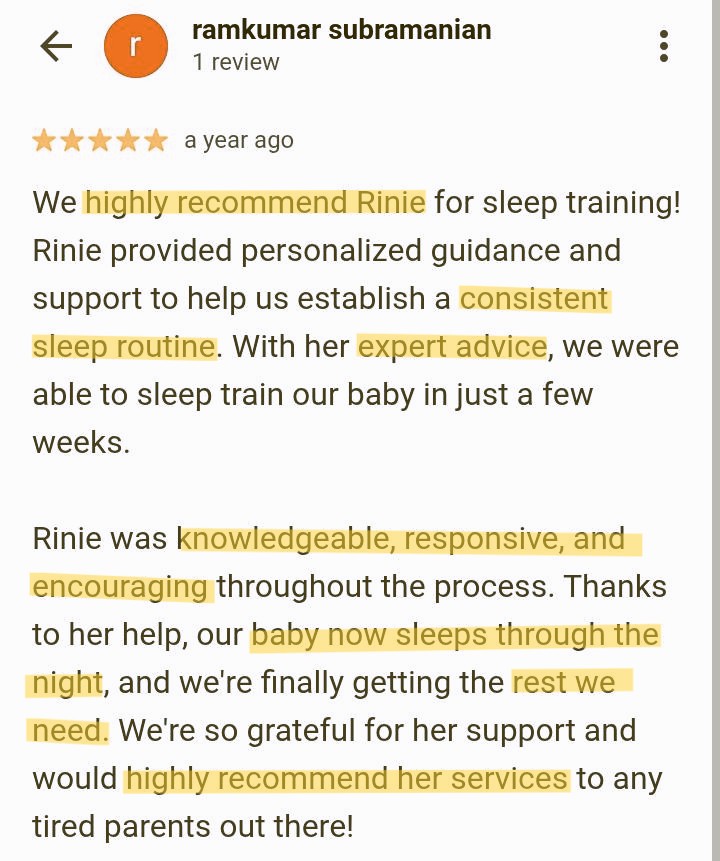
Look at our Reviews
References (APA 7th Edition)
Mindell, J. A., & Owens, J. A. (2015). A clinical guide to pediatric sleep: Diagnosis and management of sleep problems (3rd ed.). Wolters Kluwer.
Sadeh, A. (2004). A brief screening questionnaire for infant sleep problems: Validation and findings for an Internet sample. Pediatrics, 113(6), e570–e577. https://doi.org/10.1542/peds.113.6.e570
Tikotzky, L., & Sadeh, A. (2009). Maternal sleep-related cognitions and infant sleep: A longitudinal study. Journal of Family Psychology, 23(6), 846–856. https://doi.org/10.1037/a0016750
Blunden, S., & Galland, B. (2014). The complexities of defining optimal sleep: Empirical and theoretical considerations. Nature and Science of Sleep, 6, 129–140. https://doi.org/10.2147/NSS.S45707
Written By:


