Overtired vs Undertired Baby: Signs, Causes, and How to Fix Both
Jan 28, 2026
If your baby is cranky, fighting sleep, waking frequently at night, or up for the day far too early, you’ve probably wondered:
“Is my baby overtired… or undertired?”
This confusion is incredibly common and getting it wrong can keep families stuck in poor sleep cycles for weeks or even months, even when they’re trying their best to “fix” sleep.
Let’s break this down clearly, without jargon or guesswork, from a baby sleep training and sleep consultant perspective.

What Does “Overtired” Actually Mean?
An overtired baby has stayed awake longer than their body can comfortably handle.
When this happens, the body releases stress hormones like cortisol and adrenaline, making it harder for your baby to fall asleep and stay asleep even though they are exhausted.
This is why overtiredness is one of the most common causes of frequent night wakings and short naps.
Common Signs of an Overtired Baby
- Fighting naps and bedtime
- Short naps (30–45 minutes)
- Frequent night wakings
- Early morning wake-ups (5–6 AM)
- Crying or arching during settling
- Hyperactivity or “wired” behaviour before sleep
Important to note:
👉 Overtired babies don’t always look sleepy. Many look more alert, unsettled, or restless before sleep.
What Does “Undertired” Mean?
An undertired baby simply hasn’t built enough sleep pressure before being put down to sleep.
This is far less common than overtiredness, but it does happen especially during nap transitions, schedule changes, or developmental leaps.
Common Signs of an Undertired Baby
- Taking a long time to fall asleep
- Treating bedtime like playtime
- Happy night wakings
- Split nights (long wake periods overnight)
- Short naps with a happy mood on waking
Why Parents Often Mix These Two Up
Both overtired and undertired babies can:
- Resist sleep
- Wake frequently
- Nap inconsistently
The difference lies in behaviour, mood, and timing, not just total sleep hours.
This is why simply:
- Stretching wake windows
- Cutting naps
- Pushing bedtime later
without understanding the root cause often makes baby sleep problems worse, not better.
Key Differences at a Glance
Overtired Baby
- Cranky, emotional, unsettled
- Short naps
- Early morning wakes
- Sleep gets worse the longer this continues
Undertired Baby
- Generally happy and alert
- Long settling time
- Night wakings are calm
- Sleep improves once timing is adjusted
Common Causes of Overtiredness
Overtiredness is extremely common in babies struggling with sleep.
Typical causes include:
- Wake windows stretched too far
- Bedtime pushed late
- Inconsistent nap timing
- Busy days with overstimulation
- Trying to “tire baby out”
Ironically, trying to reduce sleep to improve nights often creates more night wakings and bedtime battles.
Common Causes of Undertiredness
Undertiredness may occur during:
- Age-related nap transitions
- Too much daytime sleep
- Bedtime that’s too early for the baby’s current needs
- Sudden schedule changes
How to Fix Overtiredness
Fixing overtiredness requires consistency and patience, not drastic changes.
Helpful strategies include:
- Temporarily shortening wake windows
- Bringing bedtime earlier
- Focusing on consistent sleep routines
- Allowing recovery sleep (yes, this is okay)
- Avoiding over-stimulation in the evenings
Overtiredness usually takes several days of consistency to resolve not overnight fixes.
How to Fix Undertiredness
If undertiredness is the issue:
- Gradually extend wake windows (15–20 minutes at a time)
- Adjust nap lengths thoughtfully
- Avoid cutting naps abruptly
- Reassess total sleep needs based on age and temperament
Small, intentional changes work far better than sudden schedule overhauls.
Why Guessing Often Backfires
Without understanding whether your baby is overtired or undertired, parents often:
- Make random schedule changes
- Follow conflicting advice online
- Second-guess every nap and bedtime
Sleep improves fastest when changes are intentional, gradual, and personalised.
If you’re unsure which issue you’re dealing with overtiredness or undertiredness 1:1 sleep training support can make all the difference.
Need Personalised Help With Your Baby’s Sleep?
Rinie’s 1:1 Baby Sleep Training Program looks beyond generic charts and averages and works with:
- Your baby’s temperament
- Feeding method
- Family setup
- Cultural and practical realities
No guesswork.
No one-size-fits-all schedules.
Just a sleep plan designed for your baby.
👉 Explore 1:1 baby sleep training here:
Final Thought
Most babies aren’t “bad sleepers.”
They’re just mis-timed sleepers.
Once you understand whether your baby is overtired or undertired and respond appropriately sleep becomes calmer, more predictable, and far less stressful for everyone.
References (APA 7th Edition)
Blunden, S., & Galland, B. (2014). The complexities of defining optimal sleep: Empirical and theoretical considerations. Nature and Science of Sleep, 6, 129–140. https://doi.org/10.2147/NSS.S45707
Mindell, J. A., & Owens, J. A. (2015). A clinical guide to pediatric sleep: Diagnosis and management of sleep problems (3rd ed.). Wolters Kluwer.
Sadeh, A. (2004). A brief screening questionnaire for infant sleep problems: Validation and findings for an Internet sample. Pediatrics, 113(6), e570–e577. https://doi.org/10.1542/peds.113.6.e570
Tikotzky, L., & Sadeh, A. (2009). Maternal sleep-related cognitions and infant sleep: A longitudinal study. Journal of Family Psychology, 23(6), 846–856. https://doi.org/10.1037/a0016750
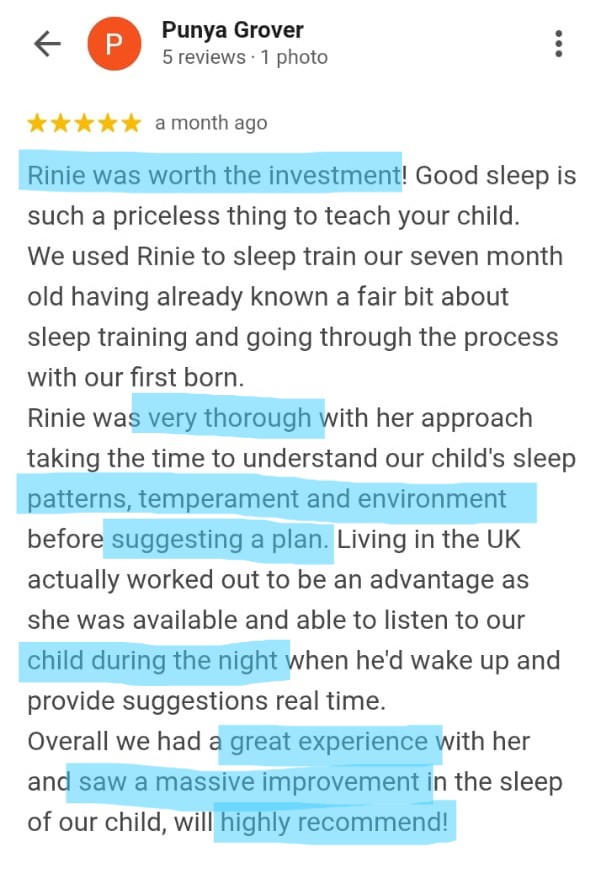
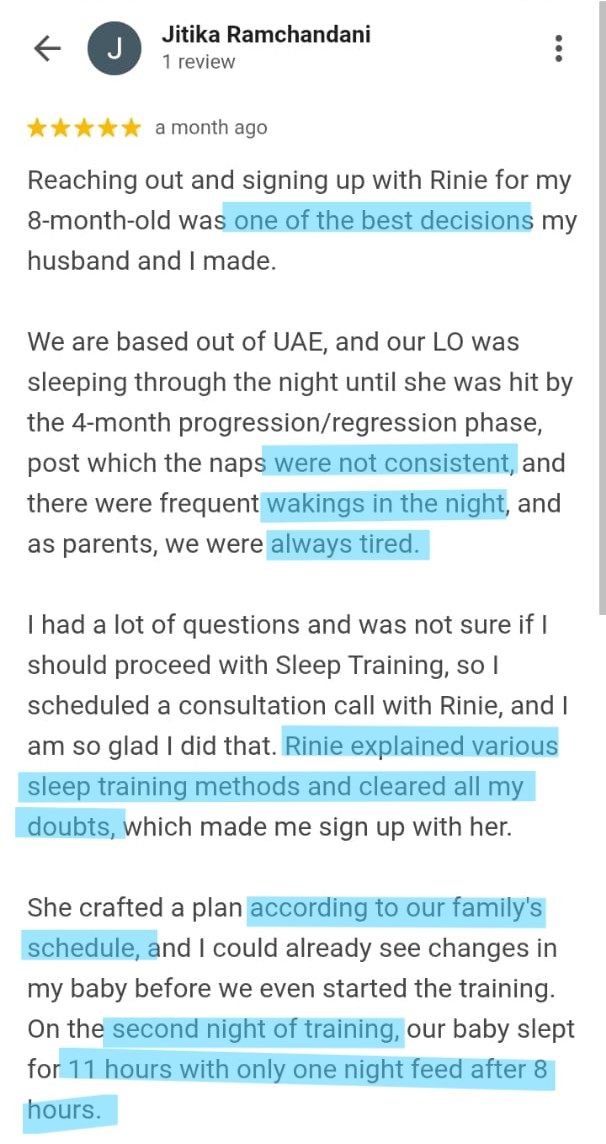
Look at our reviews
Written By:


