Why Does My Baby Wake Up Happy in the Middle of the Night?
Feb 23, 2026
Many parents are puzzled when their baby wakes smiling, babbling, or laughing in the middle of the night.
Is my baby not tired enough? Are they getting too much sleep?
Rest assured: waking happy at night is completely normal. But understanding why it happens can help you manage sleep routines better.
Understanding Night Waking
Babies naturally cycle through light and deep sleep, just like adults.
- Light sleep (REM sleep) is when the brain is active, dreaming, and processing information.
- Deep sleep (non-REM sleep) is restorative and quiet.
During REM sleep, babies’ brains are very active, and they may:
- Smile or laugh
- Babble or coo
- Move arms and legs
This often happens just before or after a full sleep cycle, which can make them wake up appearing happy rather than crying.
Common Reasons for Happy Night Wakings
1. Natural Sleep Cycles
Babies cycle between light and deep sleep every 50–60 minutes (for infants).
A baby may wake at the end of a cycle, fully alert and content, especially if:
- They are well-fed
- Comfortable in the sleep environment
This explains why some night wakings are quiet and happy rather than fussy.
2. Overstimulation During the Day
Paradoxically, a very active day can lead to happy night wake-ups:
- Babies may be processing new experiences
- Brain activity is high, even during sleep
- Light sleep stages may become more active, resulting in midnight giggles or babbling
3. Sleep Associations
Babies who are used to falling asleep with a parent, pacifier, or bottle might wake content if those cues are nearby.
For example:
- A baby falling asleep with a pacifier may wake happily, find it, and resettle without crying.
This is a sign your baby feels secure and safe, not that something is wrong.
4. Developmental Milestones
Happy night wakings often coincide with:
- Rolling over, sitting, or crawling
- Babbling or early speech sounds
- Teething or growth spurts
These milestones increase brain activity during sleep, leading to alert, happy awakenings.
5. Independent Sleep Skills
Some babies wake happy because they have learned self-soothing skills early:
- Rolling over to a comfortable position
- Finding a pacifier
- Settling back without help
This is a positive sign of independent sleep development.
When Happy Night Waking Becomes a Concern
In most cases, it’s not a problem. However, consult a sleep consultant or pediatrician if your baby:
- Wakes multiple times and cannot resettle without help
- Has short naps or very fragmented night sleep
- Shows signs of discomfort (rubbing ears, pulling ears, or fever)
How Parents Can Support Healthy Night Sleep
✔ Keep a Consistent Sleep Routine
- Bedtime rituals signal the brain that it’s time to sleep
- Even happy night wakings settle faster when routines are predictable
✔ Provide a Safe, Comfortable Sleep Environment
- Appropriate room temperature
- White noise to mask household sounds
- Dark, quiet room
✔ Observe, Don’t Panic
- Happy awakenings are usually brief
- Avoid unnecessary interventions unless baby shows distress
✔ Reinforce Independent Sleep
- Encourage self-soothing skills
- Allow brief awakenings without immediately intervening
Key Takeaway
Happy night wakings are normal and usually a good sign.
They indicate:
- A secure, comfortable baby
- Healthy sleep cycles
- Developing self-soothing skills
With consistent routines and gentle guidance, these awakenings often resolve naturally as babies grow.

1:1 Baby Sleep Training Support
If you need personalized guidance for night wakings, 1:1 sessions with Rinie can help you:
- Analyse sleep patterns
- Implement gentle, age-appropriate strategies
- Maintain healthy sleep for both baby and parents
👉 Explore 1:1 baby sleep training here:
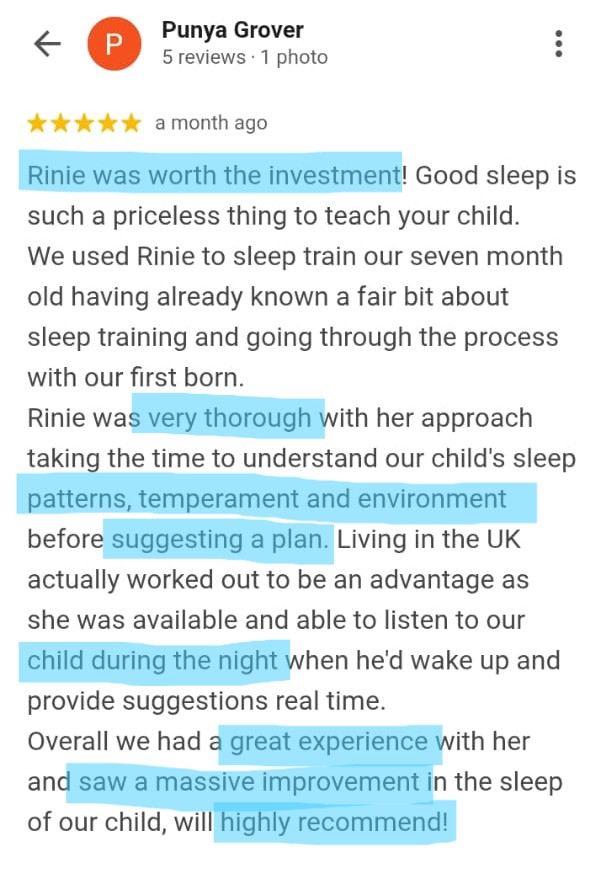
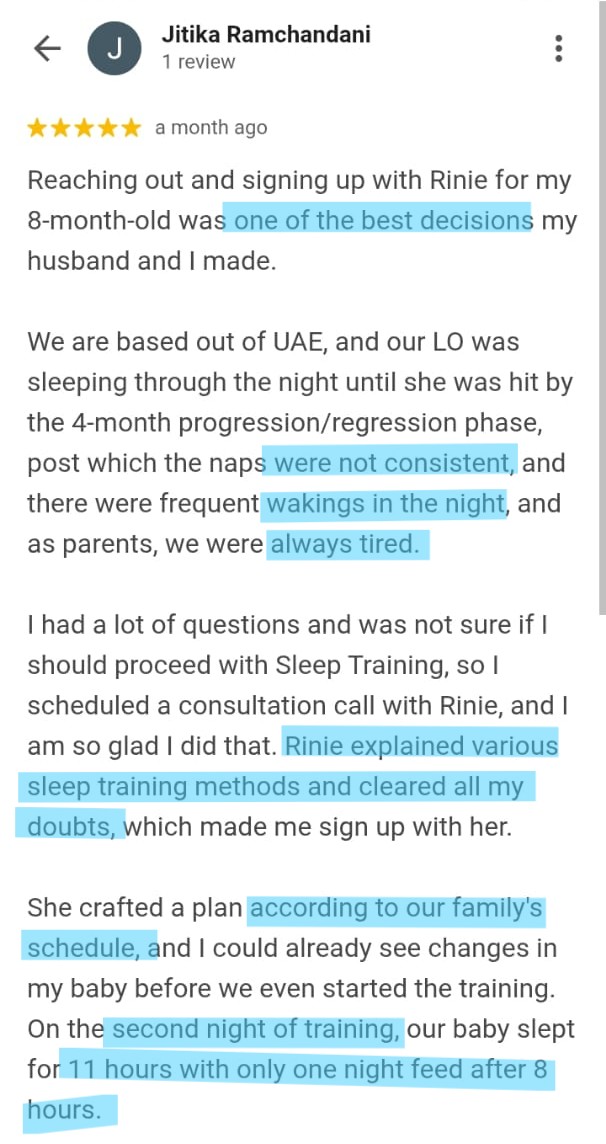
Look at our Reviews
References (APA 7th Edition)
Mindell, J. A., & Owens, J. A. (2015). A clinical guide to pediatric sleep: Diagnosis and management of sleep problems (3rd ed.). Wolters Kluwer.
Sadeh, A. (2004). A brief screening questionnaire for infant sleep problems: Validation and findings for an Internet sample. Pediatrics, 113(6), e570–e577. https://doi.org/10.1542/peds.113.6.e570
Tikotzky, L., & Sadeh, A. (2009). Maternal sleep-related cognitions and infant sleep: A longitudinal study. Journal of Family Psychology, 23(6), 846–856. https://doi.org/10.1037/a0016750
Blunden, S., & Galland, B. (2014). The complexities of defining optimal sleep: Empirical and theoretical considerations. Nature and Science of Sleep, 6, 129–140. https://doi.org/10.2147/NSS.S45707
Written By:


